US Researchers Compress Multi-Step Drug Synthesis Into a Single Visible-Light Reaction Using Photocatalytic Vicinal Disubstitution
A visible-light-driven photocatalytic method developed across three US universities achieves two simultaneous carbon modifications in a single reaction, reducing the chemical steps, time, and materials required in complex molecule synthesis.
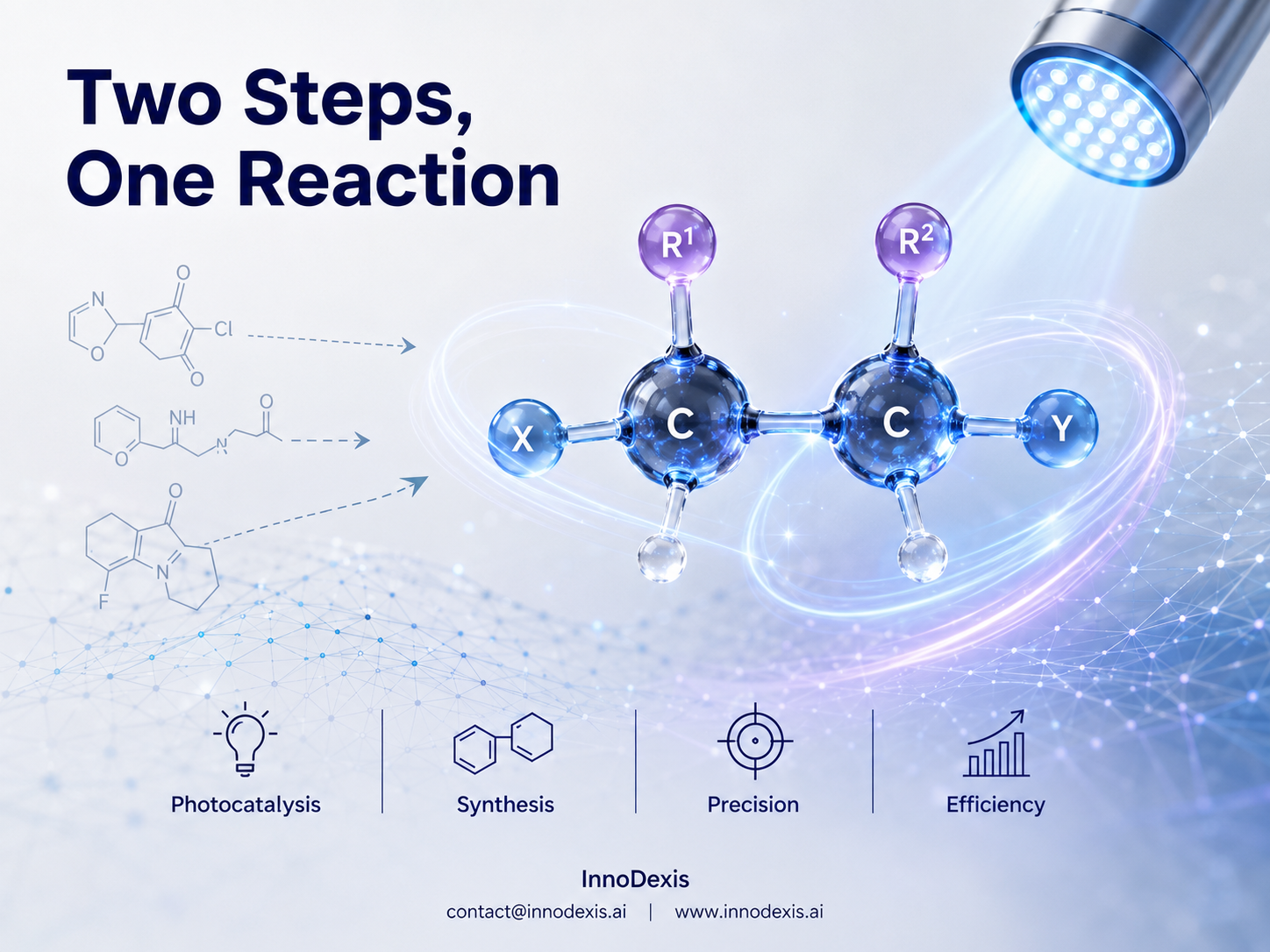
InnoDexis has published its latest Innovation Intelligence Report covering photocatalytic synthetic chemistry, analyzing a high-significance innovation developed across three institutions in the United States. The report reveals that researchers from the University at Buffalo, Binghamton University, and Worcester Polytechnic Institute have developed a visible-light-driven method that achieves vicinal disubstitution — the simultaneous modification of two adjacent carbon atoms — in a single reaction, compressing what previously required separate sequential steps, intermediate compounds, and harsher chemical conditions into one operation with direct implications for pharmaceutical synthesis efficiency.
Key Findings
The method achieves vicinal disubstitution — two simultaneous modifications to neighbouring carbon atoms — in a single reaction. This is the defining technical advance: two sequential reactions that were previously required to reach the same structural outcome are replaced by one operation, directly reducing the number of steps, intermediate compounds, and associated failure points in complex molecule synthesis pathways.
Blue LEDs providing mild visible light drive the photocatalytic reaction, replacing the harsher conditions associated with ultraviolet light. UV-driven synthesis carries a known risk of molecular degradation in sensitive chemical structures — a constraint that limits the range of compounds accessible through photocatalytic methods. The use of visible light removes this constraint, broadening the scope of molecular targets the method can be applied to, including compounds previously considered difficult or impractical to synthesise through photocatalytic approaches.
The method is built on widely available carbon-halogen starting materials with established chemical familiarity across synthetic chemistry. This is a strategically significant design choice: a synthesis advance built on common, well-understood starting materials carries a more realistic pathway to pharmaceutical adoption than one requiring exotic or difficult-to-source reagents. The accessibility of the input materials lowers the barrier to integration into existing drug discovery workflows.
A single operation now achieves structural complexity that traditionally required multiple steps, each adding time, cost, and the risk of cumulative yield losses. In pharmaceutical synthesis, where every additional reaction step compounds development timelines and material consumption, the compression of two steps into one has direct efficiency implications across the drug discovery and candidate selection pipeline.
Photocatalysis using visible light is identified in the dataset as an emerging strategic tool in synthetic chemistry — enabling precision in molecular modification without the energy costs or molecular damage associated with harsher reaction conditions. This positions the method not as an isolated technique but as part of a broader directional shift in how synthetic chemists approach the construction of structurally complex molecules.
Strategic Insight and Trend Analysis
The strategic significance of this innovation is best understood through the lens of synthetic efficiency rather than chemistry alone. Drug discovery timelines are governed in part by the number of steps required to construct candidate molecules — each additional step consuming time, materials, and resources while introducing cumulative risk of yield loss or structural failure. Methods that compress multi-step sequences into fewer operations therefore have compounding effects on the speed and cost of moving from a discovery concept to a testable clinical candidate.
Vicinal disubstitution — the simultaneous modification of two adjacent carbon atoms — has historically required sequential reactions because no single mild-condition method existed to achieve both modifications together. The ICR histone mapping platform resolved a biological bottleneck through tool development; this photocatalytic method resolves a synthetic chemistry bottleneck through reaction design. Both represent the same category of advance: removing a constraint that has defined the ceiling of what is practically achievable in their respective fields.
The choice of visible light over ultraviolet is not merely a technical preference — it is a strategic design decision that determines the breadth of the method's applicability. Sensitive molecular structures that would degrade under UV conditions remain intact under blue LED irradiation, meaning the method can reach compound classes that photocatalytic approaches have historically been unable to access. This expansion of accessible chemical space is where the long-term pharmaceutical value of the method resides.
The use of carbon-halogen starting materials — widely available and chemically familiar to synthetic chemists — further reinforces the method's translational credibility. Pharmaceutical R&D organisations evaluating new synthetic methods weigh both the technical performance and the practical integration burden. A method built on common inputs and mild conditions clears both thresholds more readily than approaches requiring specialised infrastructure or reagents.
Global and Industry Implications
For corporates and R&D teams in pharmaceutical and medicinal chemistry, the method offers a near-term opportunity to evaluate visible-light photocatalysis as a tool for compressing synthesis pathways in drug discovery programmes. The reduction in chemical steps, intermediate compounds, and harsher conditions aligns directly with efficiency objectives in candidate synthesis, and the use of widely available starting materials supports integration into existing laboratory workflows without significant infrastructure investment.
For investors and capital allocators, the innovation signals continued momentum in photocatalytic chemistry as a platform capability within pharmaceutical synthesis. Methods that demonstrably reduce synthesis complexity and broaden accessible chemical space carry value across multiple drug discovery programmes simultaneously, making platform-level photocatalytic tools a category worth monitoring for both licensing potential and broader adoption trends across the sector.
For policymakers and national innovation bodies, the three-institution US collaboration demonstrates the value of multi-site research partnerships in advancing applied chemistry. The development of synthesis methods with direct pharmaceutical relevance reflects a productive alignment between academic research output and industrial translation priorities — a model that national innovation strategies in chemistry and life sciences can reference and support.
InnoDexis Statement
"By achieving two simultaneous carbon modifications under mild visible-light conditions, this photocatalytic method compresses the structural complexity pathway in drug synthesis — shifting the question from how many steps are needed to how few are now sufficient," noted InnoDexis in its latest intelligence report.
Conclusion
As pharmaceutical R&D organisations face sustained pressure to reduce discovery timelines and synthesis costs, methods that compress multi-step reaction sequences into single operations represent a structurally relevant advance in the chemistry toolkit. The visible-light photocatalytic vicinal disubstitution method developed across three US institutions broadens both the efficiency and the chemical scope of complex molecule synthesis. InnoDexis will continue to monitor developments in photocatalytic synthetic chemistry, visible-light reaction design, and the adoption of compression methods across pharmaceutical and medicinal chemistry pipelines. The complete Photocatalytic Synthesis Innovation Intelligence Report is available to InnoDexis subscribers and enterprise clients.
About InnoDexis
InnoDexis is a global Innovation Intelligence platform that tracks, analyzes, and interprets breakthrough innovations, prototypes, and emerging technologies across industries and countries. Its intelligence helps corporates, investors, and policymakers understand the true structure and direction of global innovation. Learn more at innodexis.ai.