Shared Genetic Pathways Identified Across Major Cardiovascular Diseases as Multi-Condition Treatment Model Emerges
Research identifying 18 shared genes across vascular conditions signals a shift toward pathway-driven therapies targeting multiple diseases.
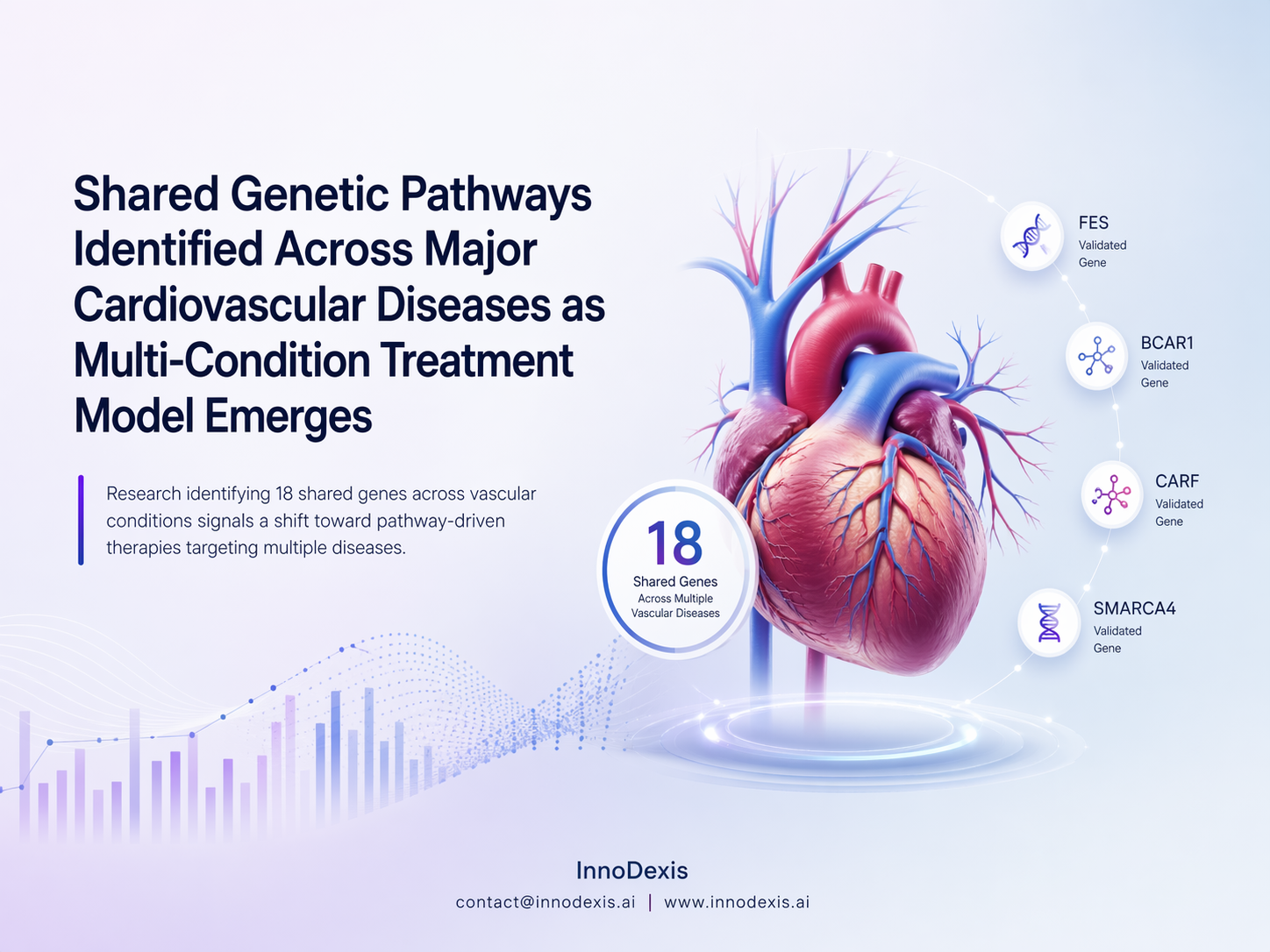
InnoDexis has published its latest Innovation Intelligence Report covering cardiovascular genomics and therapeutic innovation, analyzing recent research developments across multiple disease categories. The report reveals that shared genetic drivers are now being identified across major cardiovascular conditions, with 18 genes linked to multiple vascular diseases. Functional validation of key genes and experimental application of gene-editing tools indicate a transition toward targeting underlying biological pathways rather than treating individual conditions in isolation.
Key Findings
A total of 18 genes have been identified as common genetic drivers across multiple cardiovascular and vascular diseases. This finding indicates that conditions such as coronary artery disease, stroke, and hypertension may share overlapping biological mechanisms rather than functioning as entirely distinct disease categories.
Four genes—FES, BCAR1, CARF, and SMARCA4—have been functionally validated, demonstrating measurable roles in vascular disease processes. The validation of these genes provides a defined starting point for therapeutic targeting and supports the biological relevance of shared genetic pathways.
CRISPR-based experimental methods were used to test the impact of these genes on vascular smooth muscle cells. This approach enabled direct observation of gene function within disease-relevant cellular environments, strengthening the link between genetic variation and vascular pathology.
The research emphasizes pleiotropy, referring to the role of single genes influencing multiple disease outcomes. This focus highlights a structural shift in how cardiovascular diseases are understood, moving from isolated disease models to interconnected biological systems.
Current treatment models continue to address cardiovascular diseases as separate clinical entities. However, the identification of shared genetic mechanisms suggests that therapeutic strategies may increasingly target common pathways across multiple conditions.
Strategic Insight and Trend Analysis
The identification of shared genetic drivers across cardiovascular diseases reflects a broader shift toward pathway-centric models in biomedical research. With 18 genes linked across multiple conditions and four genes functionally validated, the data indicates that overlapping biological mechanisms are becoming more clearly defined.
The use of CRISPR to test gene function in vascular smooth muscle cells represents a methodological advancement that enables direct validation of genetic targets. This strengthens the transition from associative genomics to experimentally verified biology, which is critical for therapeutic development.
The emphasis on pleiotropy introduces a structural rethinking of disease classification. Rather than treating coronary artery disease, stroke, and hypertension as independent categories, the findings suggest these conditions may be different manifestations of shared biological pathways. This reframing has implications for how diseases are diagnosed, studied, and treated.
The emerging model shifts drug discovery from a disease-specific approach toward pathway-driven therapeutics. Instead of developing separate drugs for each condition, research is increasingly focused on identifying core biological mechanisms that can be targeted across multiple diseases. This trend reflects a move toward scalability in treatment design, where a single therapeutic intervention may address multiple clinical outcomes.
Global and Industry Implications
For corporates and R&D teams, the findings indicate a transition toward platform-based therapeutic development targeting shared genetic pathways. This approach may enable broader clinical applications from a single research program, potentially improving development efficiency.
For investors and capital allocators, pathway-driven therapeutics represent a shift in value creation, where a single asset may address multiple disease markets. This could influence portfolio strategies by prioritizing technologies with cross-indication potential.
For policymakers and national health systems, the move toward multi-condition therapies may require adjustments in regulatory frameworks and reimbursement models. Traditional disease-specific approval pathways may need to evolve to accommodate treatments targeting shared biological mechanisms.
InnoDexis Statement
“The identification of shared genetic pathways across cardiovascular conditions signals a transition from disease-specific treatment models to biologically integrated therapeutic strategies, with implications for how therapies are developed, evaluated, and scaled,” noted InnoDexis in its latest intelligence report.
Conclusion
The emergence of shared genetic drivers across cardiovascular diseases highlights a shift toward pathway-based therapeutic development. As validated gene targets and gene-editing methods continue to advance, the distinction between individual disease categories may become less central than underlying biological mechanisms. This transition has the potential to reshape drug discovery, clinical development, and treatment strategies at scale. The complete Cardiovascular Genomics Innovation Intelligence Report is available to InnoDexis subscribers and enterprise clients.
About InnoDexis
InnoDexis is a global Innovation Intelligence platform that tracks, analyzes, and interprets breakthrough innovations, prototypes, and emerging technologies across industries and countries. Its intelligence helps corporates, investors, and policymakers understand the true structure and direction of global innovation. Learn more at innodexis.ai.