RNA Sequencing Achieves Output Parity with DNA Sequencing as 234 Genomics Breakthroughs Emerge Across 27 Countries
For the first time in the InnoDexis global tracker, RNA sequencing matched DNA sequencing in monthly innovation output, signaling a structural shift in genomics research focus.
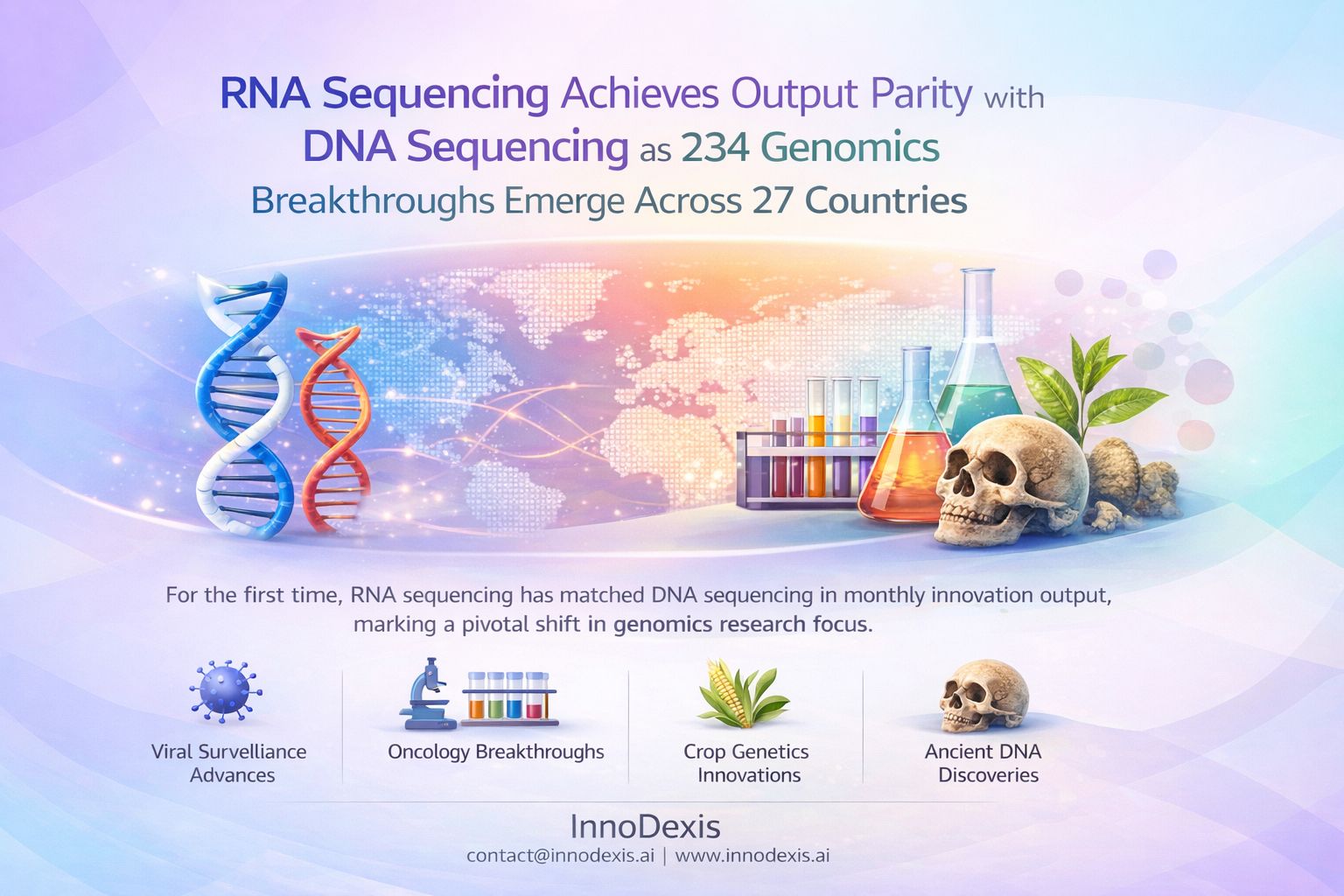
InnoDexis has published its latest Innovation Intelligence Report covering global genomics innovation, analyzing 234 breakthroughs across 27 countries during a 19-day period in February 2026. The report reveals that RNA sequencing achieved output parity with DNA sequencing for the first time, with both domains recording exactly 38 articles each in the global tracker. This convergence marks a measurable inflection point in research emphasis, with RNA-focused applications expanding across infectious disease surveillance, oncology modeling, crop genetics, colorectal screening, and ancient population studies.
Key Findings
RNA sequencing and DNA sequencing each recorded 38 documented innovations in February 2026, reflecting equal representation in the InnoDexis global tracker. This parity suggests that RNA-focused methodologies have reached comparable research intensity to established DNA sequencing applications.
Population-scale viral surveillance advanced through genome-based estimation of Epstein–Barr virus (EBV) load using data from UK Biobank and All of Us cohorts comprising more than 822,000 participants. Reported EBV detection rates ranged from 16% to 21%, indicating that viral burden assessment can be derived directly from genomic datasets without a separate viral assay.
Comparative oncology findings from the University of Exeter identified FBXW7 mutations in more than 50% of feline mammary tumours across five countries. The same gene functions as a tumor suppressor in humans, reinforcing cross-species translational relevance and strengthening the evidence base for comparative cancer modeling.
A crop genetics milestone was documented by Leibniz Institute of Plant Genetics and Crop Plant Research (IPK), where the STR4 resistance gene reached commercial deployment in France in 2026 without genetic modification. Within the broader 2,888-article dataset referenced by InnoDexis, this represented the fastest transition from Technology Readiness Level 1 to 9.
Colorectal cancer screening research led by teams at Cambridge and the Sanger Institute reported approximately twofold elevated viral detection and around 40% case identification using stool metagenomics across 877 samples, indicating measurable progress toward non-invasive diagnostic strategies.
Ancient DNA analysis from Uppsala University involving 85 Neolithic individuals revealed burial patterns organized around second- and third-degree relatives rather than nuclear family units, demonstrating the capacity of genomic tools to reconstruct social structures inaccessible through other methodologies.
Strategic Insight and Trend Analysis
The February 2026 dataset reflects a structural broadening of genomics applications beyond traditional DNA-centric paradigms. RNA sequencing parity with DNA sequencing in documented innovation output suggests that transcriptomic analysis is no longer a secondary modality but a co-equal driver of discovery across clinical, agricultural, and anthropological domains.
The convergence of large-scale biobank data with viral load estimation demonstrates how genomic datasets are being repurposed for infectious disease surveillance at population scale. Simultaneously, cross-species cancer genomics findings and rapid crop resistance deployment indicate that translational pipelines are shortening in selected subfields.
The 2,888-article reference dataset provides context for comparative velocity, with the STR4 deployment representing the fastest Technology Readiness Level progression recorded within that corpus. This indicates that genomics innovations are not confined to exploratory phases but are reaching commercial and applied endpoints within compressed timelines.
An identified structural gap remains in neurological applications, where RNA sequencing output is strong but genetic engineering penetration remains near zero. The data suggests limited overlap between neurogenomics research and base editing or genetic intervention platforms, indicating a potential white space in translational development during 2026–2027.
Global and Industry Implications
For corporates and R&D teams, RNA sequencing parity with DNA sequencing indicates that transcriptomic capabilities should be integrated alongside genomic platforms in diagnostics, drug discovery, and agricultural development strategies. Rapid TRL progression in crop resistance and measurable diagnostic performance in colorectal screening illustrate defined commercialization pathways.
For investors and capital allocators, the dataset highlights both acceleration and asymmetry. While infectious disease surveillance and oncology modeling show translational validation, neurological genomics combined with genetic engineering reflects comparatively limited competitive density.
For policymakers and national innovation bodies, the breadth of applications—from biobank-scale viral monitoring to non-GMO crop deployment—demonstrates genomics as a cross-sector infrastructure capability. Strategic funding alignment may influence how rapidly RNA-driven platforms transition from research output to public health and agricultural resilience tools.
InnoDexis Statement
“RNA sequencing reaching parity with DNA sequencing reflects a measurable shift in research allocation and application breadth, indicating that transcriptomics is now operating as a primary innovation engine rather than a supplementary analytical layer,” noted InnoDexis in its latest intelligence report.
Conclusion
The February 2026 genomics intelligence scan documents a period of convergence and acceleration. Equalized RNA and DNA sequencing output, population-scale viral analytics, cross-species oncology validation, accelerated crop resistance deployment, and non-invasive cancer screening collectively indicate that genomics platforms are expanding in scope and maturity. The identified neurological engineering gap suggests areas to monitor in the coming innovation cycle. Continued tracking will clarify whether transcriptomic parity translates into sustained translational dominance. The complete February 2026 Genomics Innovation Intelligence Report is available to InnoDexis subscribers and enterprise clients.
About InnoDexis
InnoDexis is a global Innovation Intelligence platform that tracks, analyzes, and interprets breakthrough innovations, prototypes, and emerging technologies across industries and countries. Its intelligence helps corporates, investors, and policymakers understand the true structure and direction of global innovation. Learn more at innodexis.ai.