River Plastic Retention Model Shows 93% of European Plastic Stays on Land and 0.6% Reaches the Sea in Wageningen Study of 8,671 River Basins
A Wageningen University & Research model covering 8,671 European river basins found that 93% of plastic entering the environment in 2015 remained on land, 6% was retained within rivers and 0.6% reached river mouths.
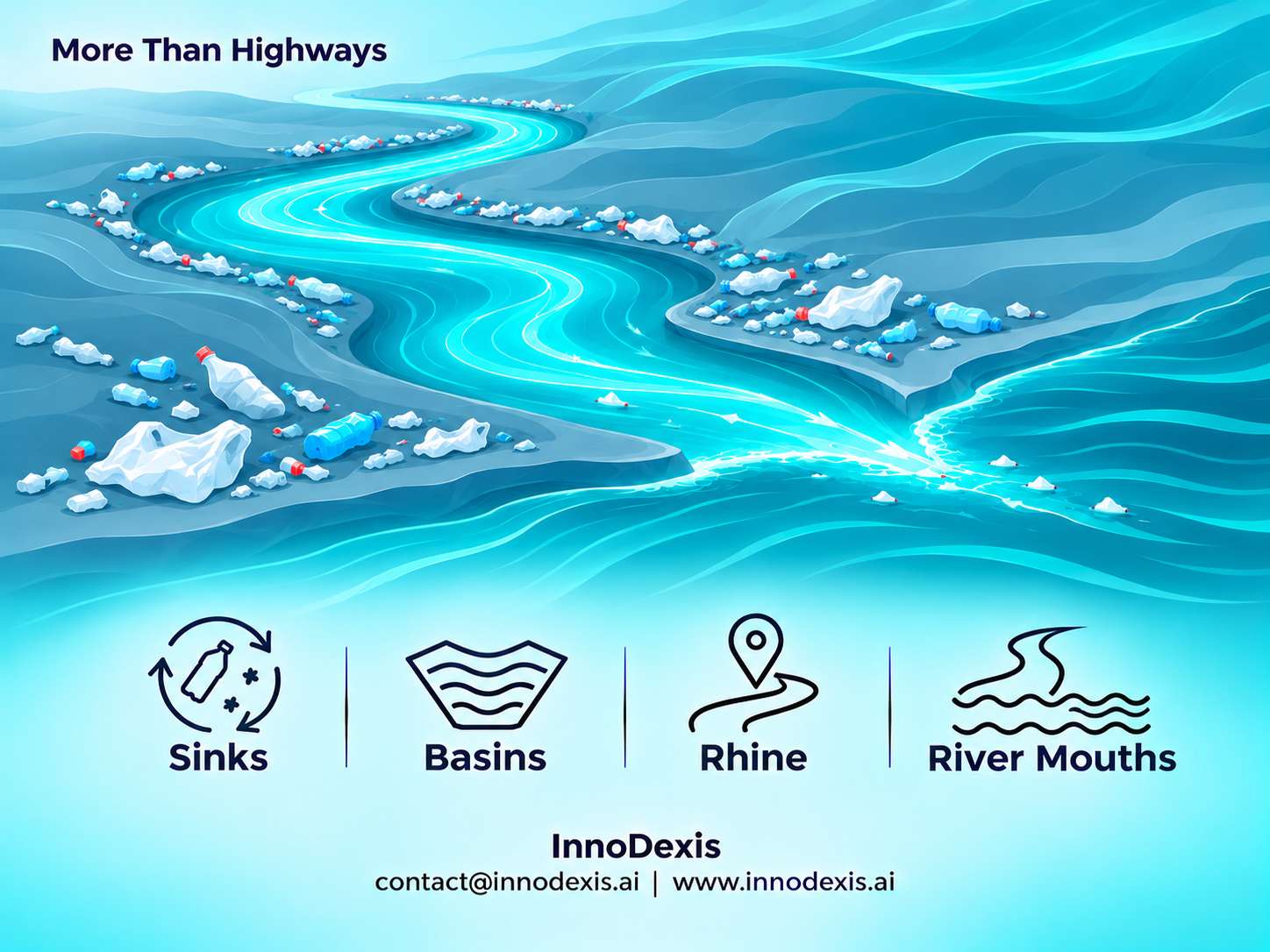
InnoDexis has published its latest Innovation Intelligence Report covering river plastic pollution modeling, analyzing one innovation from the Netherlands, published on 30 October 2026. The report reveals that a spatial model developed by Wageningen University & Research and international partners, covering 8,671 European river basins, found that of 3.55 million tonnes of plastic entering the European environment in 2015, 93% remained on land, 6% was retained within rivers and only 0.6% reached river mouths. The findings challenge the view that rivers mainly carry plastic to the sea.
Key Findings
Of the 3.55 million tonnes of plastic that entered the European environment in 2015, 93% remained on land, 6% was retained within river systems and 0.6% reached river mouths, which is approximately 20,000 tonnes. This shows that land and river systems act as primary sinks for plastic rather than simple routes to the ocean.
Earlier models assumed that rivers carry plastic waste directly to the sea. The Wageningen model accounts for retention along riverbanks, vegetation, land and sediments, and it separates macroplastics (5 mm and above) from microplastics (smaller than 5 mm), which gives a more granular picture of where each size class ends up.
Plastic pollution is concentrated in a limited number of river systems. A total of 239 river systems accounted for 80% of macroplastic pollution, and 141 river systems accounted for 80% of microplastic pollution. High-retention basins identified as targets for intervention include the Rhine, the Vistula and the Kurbagalı Dere.
The study covers 8,671 European river basins, including small coastal basins that previous macro-scale transport models overlooked. The model code and datasets are publicly accessible, which allows other researchers and policy bodies to build on the work.
The results rest on a 2015 baseline. The model does not yet include multi-year plastic accumulation, flooding events or tidal movement, and commercial readiness is rated low, since the model has been validated on a historical environmental dataset.
Strategic Insight and Trend Analysis
The dominant trend in this research is a shift in where plastic pollution policy should look. Prior models were ocean-focused and treated rivers as highways carrying waste to the sea. The Wageningen results show that 93% of plastic stays on land and a further 6% is held within rivers, leaving only 0.6% to reach river mouths. Miranda Stibora, the lead author, argues that rivers are more than highways and that attention should move to the plastic trapped within river systems.
This matters because resources follow assumptions. Clean-up effort aimed at river mouths addresses a very small share of the plastic in the environment, while the model points toward inland riverbanks, small coastal basins and terrestrial prevention, where 99% of plastic waste resides. It could displace simplistic river transport assumptions in environmental policy and shift funding toward terrestrial and riverbank waste prevention.
The concentration findings sharpen this, since 239 river systems account for 80% of macroplastic pollution and 141 for 80% of microplastic pollution. Targeting is therefore feasible rather than diffuse.
The evidence has clear boundaries. The model relies on 2015 data and omits multi-year accumulation, flooding and tidal dynamics, which may alter local retention estimates. Policy translation is also a risk, with a lag between ocean-focused plastic reduction and inland retention management. Because the method relies on publicly available datasets, it can be applied to river systems outside Europe and updated with new regional inputs.
Global and Industry Implications
For corporates and R&D teams in environmental services, waste management and water resource management, the model offers a basis for identifying high-impact locations for river and land plastic remediation. Deployment would sit inside existing municipal and regional environmental monitoring software, and integration into real-time hydrology monitoring networks for plastic pollution tracking is identified as an emerging application.
For investors and capital allocators, the finding points toward terrestrial and riverbank waste prevention as the area where funding may shift. The opportunity is not yet commercial. Commercial readiness is low, no regulatory approval requirement is apparent, and the main risk is slow adoption of updated models by international environmental regulatory bodies.
For policymakers and national innovation bodies, the results support reallocating resources from river mouths toward inland riverbanks, small coastal basins and terrestrial prevention. The model flags a possible misalignment between regional river basin clean-up regulations and the hotspot priorities it identifies. Adoption by environmental monitoring agencies is estimated at 1 to 2 years, and the public data supports future policy work.
InnoDexis Statement
“Policy assuming that rivers carry plastic to the sea misdirects effort: most plastic stays on land and in rivers, making inland retention the priority, while a 2015 baseline limits hotspot precision,” noted InnoDexis in its latest intelligence report.
Conclusion
The next milestones to watch are updates that add multi-year plastic accumulation, flooding dynamics and tidal transport, refreshed estimates using post-2015 field data, and application of the framework to river systems outside Europe. Adoption by environmental monitoring agencies, estimated at 1 to 2 years, and the translation of inland retention findings into policy will show whether attention moves from river mouths to land. InnoDexis will continue to track plastic pollution modeling, river basin management and environmental monitoring as this field develops. The complete River Plastic Retention Innovation Intelligence Report is available to InnoDexis subscribers and enterprise clients.
About InnoDexis
InnoDexis is a real-time innovation intelligence platform connecting scientific discovery to commercial opportunity. Powered by InnoGraph, its proprietary innovation knowledge graph, the platform maps technologies across the entire lifecycle, from early-stage research (TRL 1) to market deployment (TRL 9), connecting researchers, institutions, startups, companies, products and emerging opportunities.
Covering 40+ specialised industry segments and 360 technology areas, InnoDexis delivers innovation tracking, research discovery, product and startup intelligence, investment insights, and AI-powered reports. Its mission is to bridge the gap between scientific discovery and real-world impact.
InnoDexis — From Lab to Market: Real-Time Innovation Intelligence.