Polyamine Research Reveals Mechanism Linking Anti-Aging Compounds to Tumor Growth
Tokyo-Based Study Identifies eIF5A2 as a Cancer-Driving Target While Clarifying Context-Dependent Effects of Spermidine
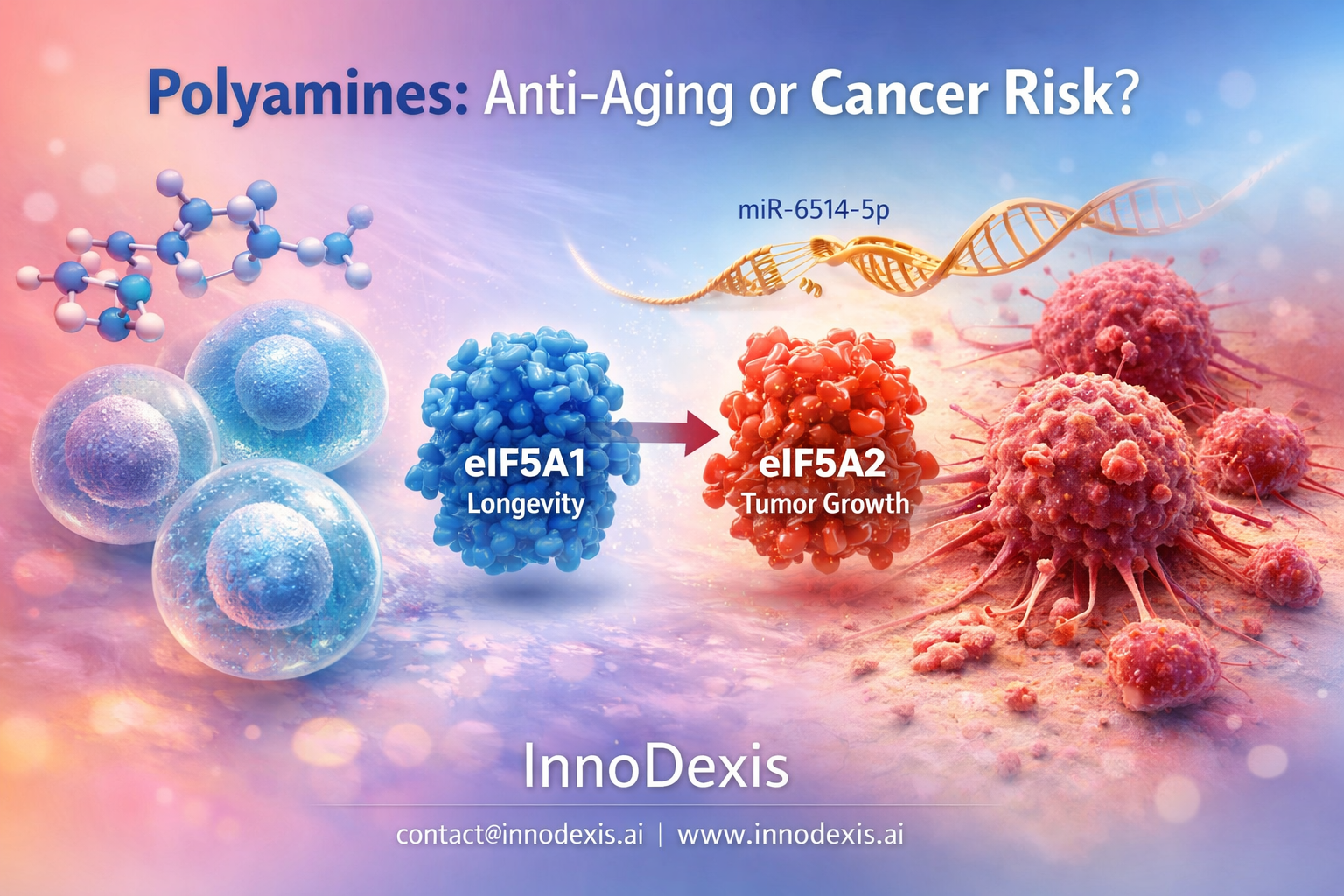
InnoDexis has published its latest Innovation Intelligence Report covering molecular oncology and longevity science, analyzing a newly reported mechanistic study from Japan. The report reveals that polyamines such as spermidine—widely associated with healthy aging pathways—can also promote tumor growth through the upregulation of a specific protein, eIF5A2. Conducted by researchers at the Tokyo University of Science, the study provides a molecular explanation for what has been described as the “polyamine paradox,” demonstrating how the same compound can exert beneficial effects in healthy cells while driving malignancy in cancerous tissues.
Key Findings
The study identifies a dual-pathway effect of polyamines, distinguishing between their roles in healthy aging and cancer progression. Polyamines such as spermidine were found to support healthy aging via activation of eIF5A1, a protein associated with beneficial cellular functions. However, in cancer cell contexts, the same compounds promoted tumor growth through increased production of eIF5A2, a distinct protein linked to malignancy.
Researchers experimentally reduced polyamine levels in human cancer cell lines and subsequently restored those levels through spermidine supplementation. This controlled approach enabled direct observation of downstream molecular effects, establishing a causal relationship between polyamine presence and changes in protein expression relevant to tumor biology.
Advanced proteomics analysis was applied to examine changes across more than 6,700 proteins. This large-scale protein profiling allowed the research team to map the broader molecular impact of polyamine modulation and identify specific regulatory pathways affected by supplementation.
A central discovery was that polyamines increase the production of eIF5A2, a protein known to drive tumor growth. The study further demonstrated that polyamines interfere with the activity of regulatory RNA—specifically miR-6514-5p—which normally suppresses eIF5A2 expression. By weakening this regulatory checkpoint, polyamines indirectly amplify tumor-promoting signaling.
Collectively, these findings clarify how polyamines can promote longevity-associated processes in normal cells while simultaneously accelerating malignant behavior in cancer cells, depending on biological context.
Strategic Insight and Trend Analysis
The findings contribute to a broader structural shift in how aging-related compounds are evaluated within biomedical research. Rather than categorizing molecules as universally beneficial or harmful, emerging data increasingly highlight context-dependent biological effects. The polyamine case illustrates how molecular pathways that enhance cellular resilience and longevity in healthy tissue may intersect with proliferative pathways in cancerous environments.
The identification of eIF5A2 as a tumor-driving protein regulated by polyamines reframes a compound previously discussed largely within the longevity domain. This repositioning reflects a growing convergence between longevity science, oncology, and translational proteomics. As nutraceutical compounds gain wider adoption, mechanistic clarity becomes essential for distinguishing preventive potential from risk exposure in specific patient populations.
The study also underscores the expanding role of advanced proteomics in uncovering pathway-level effects across thousands of proteins simultaneously. By analyzing more than 6,700 proteins, researchers were able to move beyond single-target hypotheses and capture systemic molecular responses. This systems-level approach strengthens causal inference and provides actionable targets, such as eIF5A2, for further therapeutic development.
More broadly, the research reflects a maturation in cancer biology: rather than focusing solely on genetic mutations, investigators are examining post-transcriptional regulation and RNA-mediated suppression mechanisms. The interaction between polyamines and miR-6514-5p demonstrates how disruption of regulatory RNA networks can amplify oncogenic signals. Such findings reinforce the importance of multi-layered molecular analysis in drug discovery and risk assessment.
Global and Industry Implications
For corporates and R&D teams in pharmaceuticals and nutraceuticals, the findings highlight the need for context-specific safety evaluation of longevity-associated compounds. Molecules marketed for anti-aging benefits may exhibit divergent effects in oncology-relevant environments, requiring stratified testing and targeted risk modeling.
For investors and capital allocators, the identification of eIF5A2 as a potential selective cancer therapy target introduces a defined molecular opportunity within oncology drug development. Companies exploring RNA regulation, proteomics-driven discovery, or pathway-selective inhibitors may benefit from this mechanistic clarity.
For policymakers and national innovation bodies, the research underscores the importance of integrating longevity science with cancer risk evaluation frameworks. Regulatory oversight of supplement markets and translational research funding strategies may increasingly need to reflect dual-use biological pathways.
InnoDexis Statement
“The polyamine mechanism illustrates how longevity pathways and oncogenic signaling can intersect at specific molecular nodes such as eIF5A2, reinforcing the need for context-driven evaluation rather than molecule-level generalization,” noted InnoDexis in its latest intelligence report.
Conclusion
The identification of eIF5A2 as a polyamine-regulated tumor driver represents a significant development in understanding the biological trade-offs between aging support and cancer progression. As longevity science continues to intersect with oncology, further investigation into pathway-specific modulation will be critical. Monitoring how this mechanism influences therapeutic development, supplement safety assessments, and regulatory strategies will be essential for stakeholders across sectors. The complete Polyamine Mechanism and Cancer Risk Innovation Intelligence Report is available to InnoDexis subscribers and enterprise clients.
About InnoDexis
InnoDexis is a global Innovation Intelligence platform that tracks, analyzes, and interprets breakthrough innovations, prototypes, and emerging technologies across industries and countries. Its intelligence helps corporates, investors, and policymakers understand the true structure and direction of global innovation. Learn more at innodexis.ai.