Methane-to-Medicine Conversion Demonstrated as Iron-Based Photocatalysis Enables Direct Pharmaceutical Synthesis
Researchers demonstrate the first direct synthesis of a hormone therapy compound from methane using an iron-based, light-driven catalytic system.
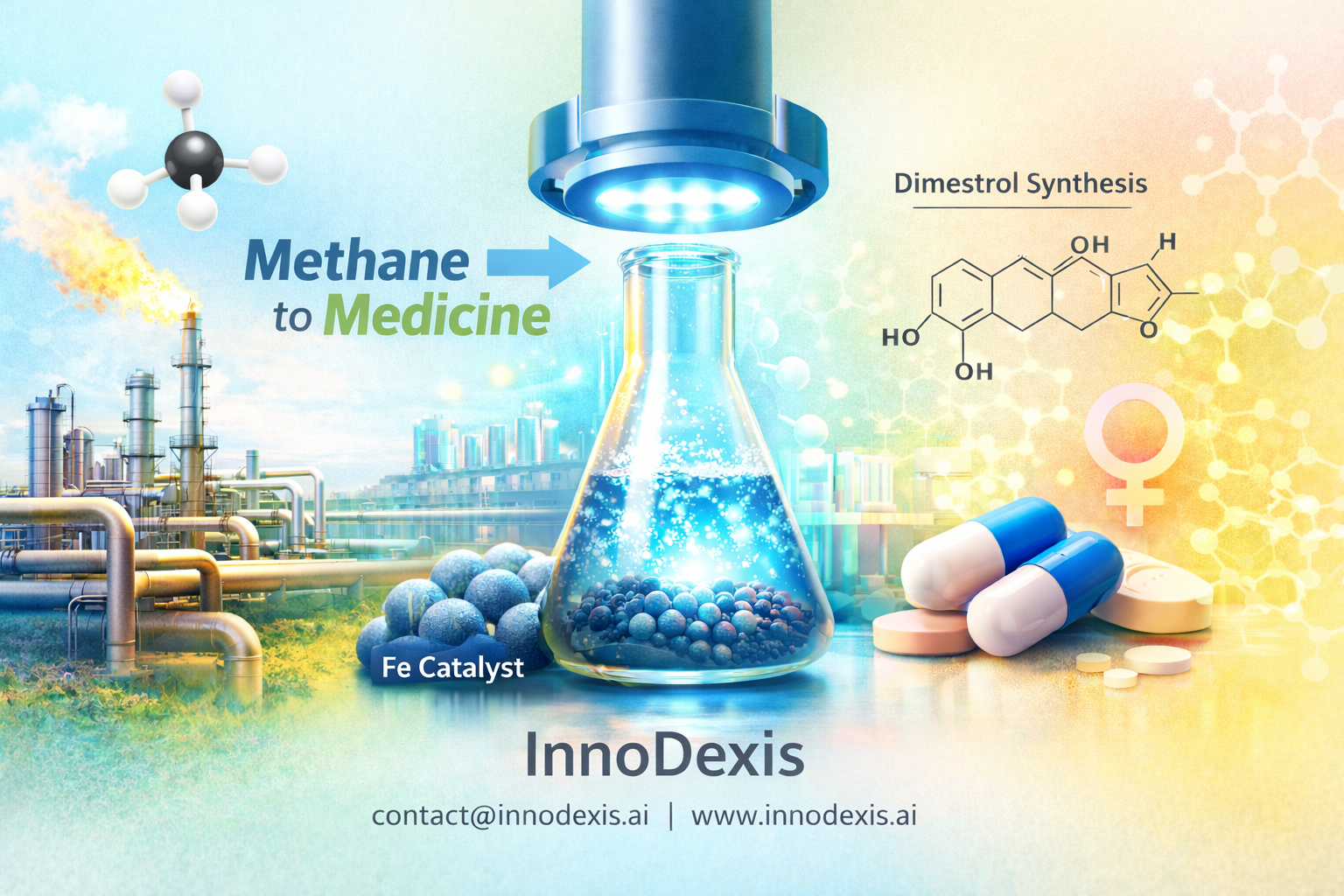
InnoDexis has published its latest Innovation Intelligence Report covering methane valorization and photocatalytic chemical synthesis, analyzing a breakthrough demonstrated in Spain during February 2026. The report reveals that researchers at the Center for Research in Biological Chemistry and Molecular Materials (CiQUS) have successfully converted methane directly into a pharmaceutical compound using an iron-based, LED-powered supramolecular catalyst. The study demonstrates the first reported synthesis of dimestrol, a non-steroidal estrogen used in hormone therapy, directly from methane under controlled and selective conditions.
KEY FINDINGS
The report identifies the first direct synthesis of dimestrol from methane. Researchers led by Martín Fañanás at CiQUS demonstrated that methane, the principal component of natural gas, can be transformed into a non-steroidal estrogen used in hormone therapy. This establishes a direct pathway from a simple hydrocarbon feedstock to a medically relevant molecule.
The conversion is enabled by an iron-based supramolecular catalyst. Unlike traditional catalytic systems that rely on precious metals, the method uses iron, an abundant and lower-cost element. The choice of iron also reduces dependence on scarce catalytic materials.
The reaction is powered by LED light and operates under mild temperatures and pressures. The light-driven mechanism facilitates selective allylation of methane while maintaining controlled reaction conditions, avoiding the extreme environments typically associated with methane activation.
A key technical advance lies in the control of radical intermediates. The catalytic system manages reactive species to prevent unwanted chlorination, ensuring selective transformation toward the desired chemical structure. This level of selectivity addresses a long-standing challenge in methane functionalization chemistry.
European Research Council-funded initiative aimed at upgrading natural gas components into higher-value chemical building blocks. The research aligns with efforts to convert abundant gaseous resources into specialty chemicals rather than combusting them for energy.
STRATEGIC INSIGHT AND TREND ANALYSIS
The findings reflect a structural shift in methane utilization strategies. Historically, methane has been primarily burned as fuel or converted into bulk chemicals through energy-intensive processes. The CiQUS demonstration indicates that methane can instead serve as a direct precursor to high-value pharmaceutical compounds through controlled photocatalytic chemistry.
The integration of iron-based catalysis with LED-driven activation highlights an emerging convergence between sustainable chemistry and advanced molecular design. By operating under mild conditions and minimizing reliance on precious metals, the method aligns with broader trends toward resource efficiency and lower environmental impact in chemical manufacturing.
The selective control of radical intermediates represents a technical inflection point. Methane’s chemical inertness has long limited its application in fine chemical synthesis due to uncontrolled side reactions. The demonstrated ability to regulate these intermediates suggests that methane functionalization may move beyond laboratory curiosity into practical synthetic platforms.
Collectively, the report identifies a transition from methane as an energy commodity to methane as a chemical feedstock for specialty and pharmaceutical markets. If scaled and replicated across other molecular targets, such methodologies could redefine the role of natural gas in advanced manufacturing systems.
GLOBAL AND INDUSTRY IMPLICATIONS
For corporates and R&D teams, the findings signal potential new pathways for feedstock diversification. Chemical and pharmaceutical manufacturers may explore methane-derived intermediates as alternatives to conventional petrochemical supply chains, particularly where mild operating conditions reduce process intensity.
For investors and capital allocators, the research underscores growing momentum in catalytic platforms that convert low-cost, abundant molecules into high-margin specialty products. Technologies that combine sustainable materials, photochemical activation, and molecular precision may represent emerging areas of industrial transition.
For policymakers and national innovation bodies, the development aligns with objectives to promote circular chemical economies and reduce dependency on traditional petrochemical routes. Public funding, such as that provided by the European Research Council, continues to play a role in advancing high-risk, high-impact catalytic research.
INNODEXIS STATEMENT
“Direct methane functionalization into pharmaceutical compounds under mild, iron-catalyzed photochemical conditions illustrates a structural evolution in how natural gas can be positioned within advanced manufacturing value chains,” noted InnoDexis in its latest intelligence report.
CONCLUSION
The demonstrated conversion of methane into a clinically relevant hormone therapy compound represents a measurable advance in methane valorization research. The integration of iron-based catalysis, LED activation, and controlled radical chemistry establishes a new reference point for selective methane transformation. As research expands into additional molecular targets, attention will focus on scalability, reproducibility, and industrial integration. Continued monitoring of methane-to-chemicals innovation will be essential to assess its broader commercial trajectory.
The complete Methane-to-Medicine Innovation Intelligence Report is available to InnoDexis subscribers and enterprise clients.
ABOUT INNODEXIS
InnoDexis is a global Innovation Intelligence platform that tracks, analyzes, and interprets breakthrough innovations, prototypes, and emerging technologies across industries and countries. Its intelligence helps corporates, investors, and policymakers understand the true structure and direction of global innovation. Learn more at innodexis.ai.