Gut Microbiome Diversity Is Lower in Vegans and Linked to Protein Intake of 12% Versus 17% of Energy in University of Copenhagen Study of 150 Danes
University of Copenhagen researchers found lower average gut bacterial diversity in 75 vegans than in 75 omnivores despite high fiber intake, and the vegans eating the most protein had diversity comparable to omnivores.
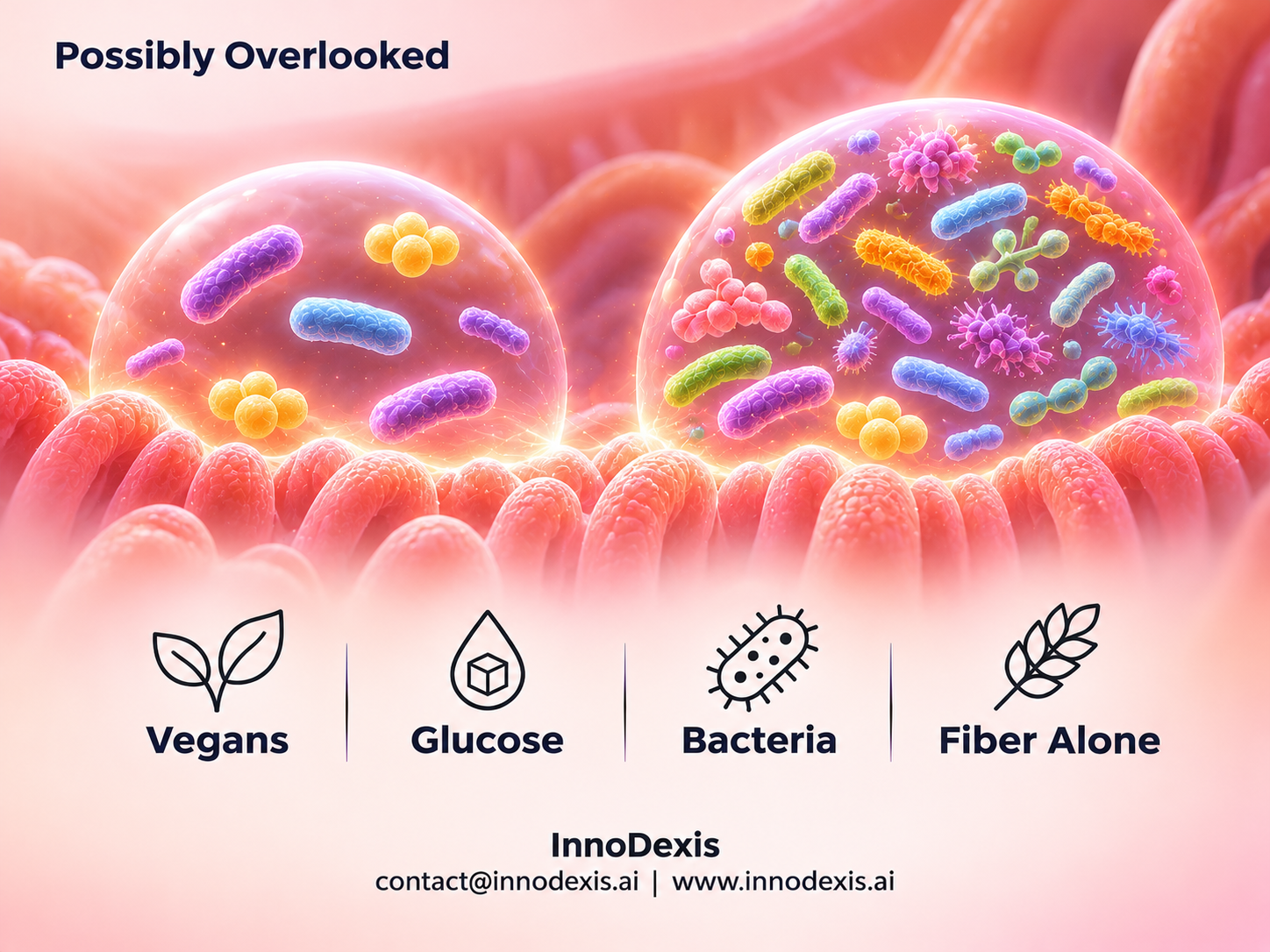
InnoDexis has published its latest Innovation Intelligence Report covering gut microbiome and nutritional science, analyzing one innovation from Denmark, published on 30 October 2026, with research partners in France and the United Kingdom. The report reveals that a University of Copenhagen study of 75 healthy vegans and 75 healthy omnivores found lower average gut bacterial diversity in vegans despite high-fiber diets, with the difference linked statistically to lower protein intake of 12 percent of dietary energy, against 17 percent in omnivores.
Key Findings
Vegans showed lower average gut bacterial diversity than omnivores despite eating high-fiber diets. The result was unexpected, because plant-based diets were assumed to produce greater diversity, and it challenges the view that a plant-based diet inherently delivers superior gut bacterial diversity across all metrics.
Lower protein intake is the factor linked to the difference. Protein supplied 12 percent of dietary energy in vegans and 17 percent in omnivores, and the vegans who consumed the most protein had diversity comparable to omnivores. Protein is therefore identified as a possibly overlooked factor, and high fiber alone does not guarantee maximal diversity.
Vegans also had a health-promoting profile. They carried more fiber-fermenting bacteria, lower blood glucose and cholesterol, and reduced inflammatory markers. Lower diversity in this group therefore sits alongside favorable health markers, which is why the finding should not be read as a case against plant-based diets.
The study profiled the gut microbiome, viruses and metabolome of 75 healthy vegans and 75 healthy omnivorous Danes using stool, blood and urine samples. This multi-compartment approach gives biomarker evidence beyond stool sequencing alone, and the comparison groups were well matched within the same population.
The evidence has clear limits. The design is observational, the sample totals 150 participants, and the results are statistical associations rather than proven causal relationships. Self-reported dietary data may also contain confounding variables, and interventional trials are needed before clinical or commercial dietary guidelines can follow.
Strategic Insight and Trend Analysis
The dominant trend in this research is a shift in how gut health is understood in plant-based diets, from a focus on fiber alone toward the balance of macronutrients. Fiber stimulates the gut microbiome, so vegans were expected to show greater bacterial diversity. They did not, and protein intake emerged as the factor most clearly associated with the gap. Oluf Borbye Pedersen of the Novo Nordisk Foundation Center for Basic Metabolic Research describes the result as a major surprise and suggests that vegans consider whether they are getting enough protein.
This matters because plant-based and vegan diets are growing in adoption worldwide, alongside rising interest in personalized microbiome health and diagnostics. Findings that could change dietary guidance for a growing group of consumers carry weight for nutrition science, food formulation and diagnostics. The work could displace fiber-centric gut health advice by pushing formulators and nutritionists to consider targeted protein strategies for vegan diets.
The caution is equally important. The study is observational and small, the associations are statistical, and the vegans in the study also showed health-promoting markers. Misreading the result could lead consumers to abandon plant-based diets prematurely, and the public could wrongly conclude that plant-based diets are inherently unhealthy. Open questions include separating the effect of protein quantity from specific amino acid profiles and other dietary components.
The strategic position is therefore a credible hypothesis with a defined test: interventional feeding studies that establish whether raising protein directly raises diversity.
Global and Industry Implications
For corporates and R&D teams, food and nutraceutical companies targeting the vegan market are advised to prioritize high-quality protein fortification alongside dietary fiber. The approach does not require new manufacturing methods, as it relies on integrating existing high-protein plant ingredients into standard vegan food products.
For investors and capital allocators, the opportunities are protein-fortified plant-based foods for gut health, microbiome diagnostics that measure protein-dependent diversity, and precision nutrition platforms built on gut biodiversity profiling. Commercial readiness is low, follow-up interventional validation needs 3 to 5 years, and securing funding for large controlled trials is a recognized difficulty.
For policymakers and national innovation bodies, no regulatory barrier is apparent for observational findings alone, but formal health claims for novel products would require EFSA or FDA review, and the lack of causal proof prevents regulators from supporting claims about protein and gut diversity. The Danish, French and British collaboration shows the value of cross-border research programs that connect clinical nutrition centers to randomized trials.
InnoDexis Statement
“Gut microbiome diversity in plant-based diets depends on macronutrient balance as well as fiber, and until interventional trials establish causality, protein adequacy is a hypothesis to test rather than a guideline to issue,” noted InnoDexis in its latest intelligence report.
Conclusion
The next milestones to watch are interventional feeding studies testing whether higher protein intake directly increases gut microbial diversity in vegans, and validation in larger and geographically diverse populations. Work to separate the effect of protein quantity from specific amino acid profiles will refine the picture, and partnerships with clinical nutrition centers will be needed for randomized controlled trials. InnoDexis will continue to track gut microbiome science, precision nutrition and plant-based nutrition as this field develops. The complete Gut Microbiome and Plant-Based Nutrition Innovation Intelligence Report is available to InnoDexis subscribers and enterprise clients.
About InnoDexis
InnoDexis is a real-time innovation intelligence platform connecting scientific discovery to commercial opportunity. Powered by InnoGraph, its proprietary innovation knowledge graph, the platform maps technologies across the entire lifecycle, from early-stage research (TRL 1) to market deployment (TRL 9), connecting researchers, institutions, startups, companies, products and emerging opportunities.
Covering 40+ specialised industry segments and 360 technology areas, InnoDexis delivers innovation tracking, research discovery, product and startup intelligence, investment insights, and AI-powered reports. Its mission is to bridge the gap between scientific discovery and real-world impact.
InnoDexis — From Lab to Market: Real-Time Innovation Intelligence.