Global Plant Populations Demonstrate Measurable Evolution Within 3–5 Years Under Climate Stress
A decade-long global study reveals that plant species can rapidly adapt or collapse within a few growing cycles, driven by genetic diversity and environmental pressure.
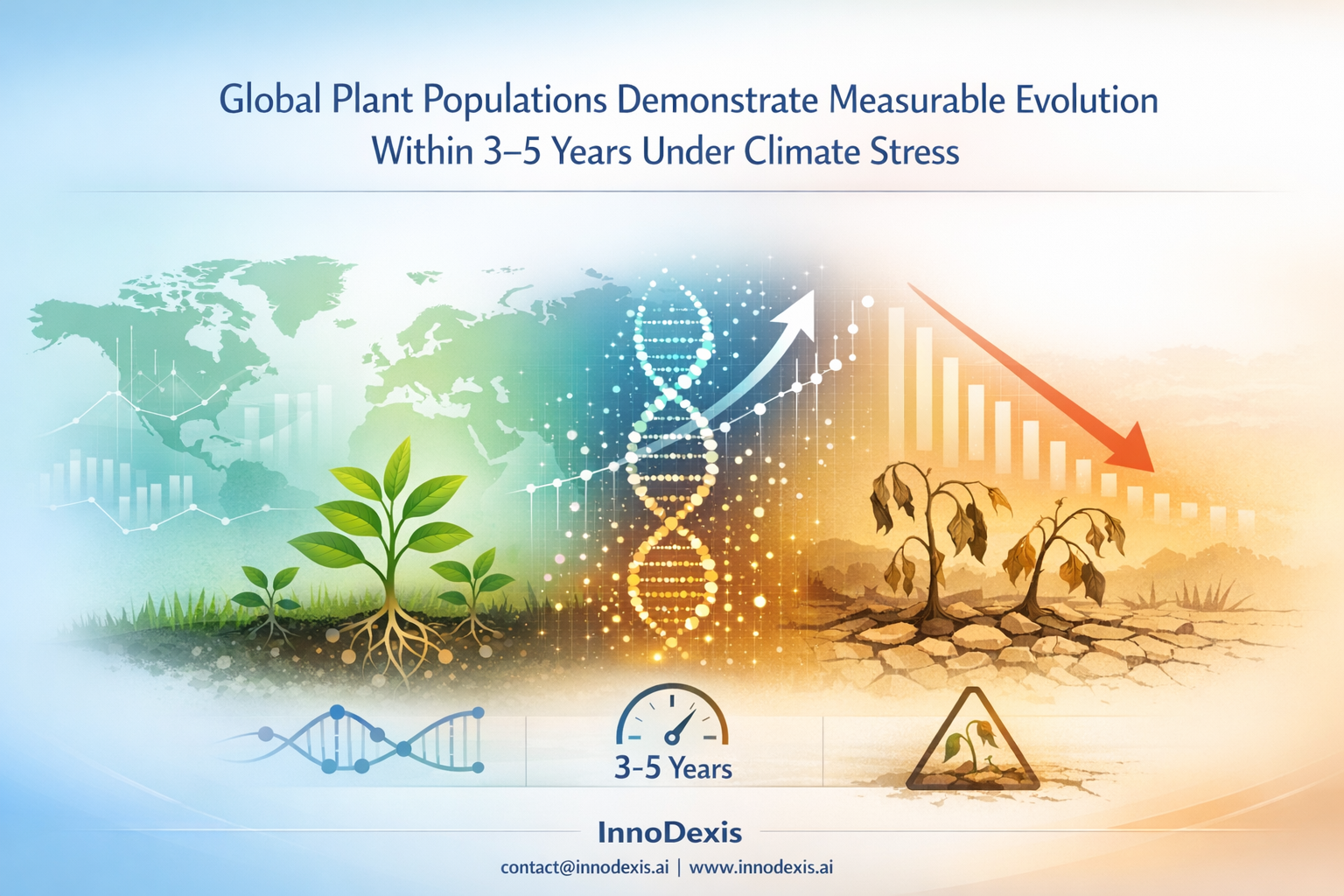
InnoDexis has published its latest Innovation Intelligence Report covering climate-driven biological adaptation, analyzing longitudinal experimental data across multiple continents over a decade-long period. The report reveals that plant populations can undergo measurable evolutionary change within 3 to 5 years under climate stress conditions, while others collapse within as little as 3 years. The findings indicate that adaptation timelines are significantly shorter than traditionally understood, with genetic diversity emerging as a central determinant of survival outcomes.
Key Findings
Plant populations demonstrated measurable evolutionary adaptation within a 3–5 year timeframe under climate stress conditions. This compressed timeline challenges conventional assumptions that evolutionary processes require significantly longer periods, indicating that adaptive responses can occur within a few growing cycles.
Millions of genetic shifts were observed across plant populations during the study period. These changes reflect high levels of genomic responsiveness, suggesting that environmental pressure can trigger rapid and widespread genetic variation within species.
Adaptive DNA variants were observed to become dominant within populations over short timeframes. This pattern indicates that beneficial genetic traits can quickly propagate when environmental conditions favor specific survival mechanisms.
Certain plant populations collapsed within as little as 3 years when exposed to extreme environmental conditions. These collapses highlight the limits of adaptive capacity when genetic variation or resilience thresholds are insufficient.
Survival outcomes were directly linked to levels of genetic diversity within populations. Populations with higher genetic variation demonstrated greater adaptive capacity, while those with limited diversity showed increased vulnerability to environmental stress.
Strategic Insight and Trend Analysis
The findings collectively indicate a structural shift in how biological adaptation is understood under climate stress. Rather than gradual, long-term evolutionary processes, the data points to rapid, measurable adaptation occurring within compressed timeframes. This shift reflects an environment where selective pressures are both immediate and intense, accelerating the pace at which genetic traits are tested and established.
The observed dominance of adaptive DNA variants within short periods suggests that evolutionary success is increasingly tied to pre-existing genetic diversity rather than incremental mutation over extended durations. In this context, populations are not gradually evolving toward resilience but are being rapidly filtered based on their existing genomic flexibility.
At the same time, the documented collapse of certain populations within 3 years indicates that the margin for adaptation is limited. Where genetic diversity is insufficient, populations may not have the capacity to respond effectively to rapid environmental changes. This creates a binary dynamic in which species either adapt within narrow time windows or face accelerated decline.
The transition from long-term evolutionary observation to real-time evolutionary tracking represents a fundamental change in scientific and strategic perspective. Evolution is no longer being interpreted primarily through historical analysis but is increasingly observable as an active and ongoing process shaped by immediate environmental pressures.
Global and Industry Implications
For corporates and R&D teams, particularly in agriculture and environmental technologies, the findings highlight the importance of integrating genetic diversity into crop development, ecosystem management, and resilience planning. Solutions that enhance or preserve genomic variability may play a critical role in sustaining productivity under changing climate conditions.
For investors and capital allocators, the data indicates emerging opportunities in domains focused on climate resilience, genomics, and biodiversity-linked technologies. Rapid adaptation dynamics suggest that solutions addressing genetic flexibility and ecosystem stability may become increasingly relevant within environmental and agricultural investment strategies.
For policymakers and national innovation bodies, the direct link between genetic diversity and survival outcomes underscores the importance of biodiversity conservation as a structural component of climate resilience. Policies focused solely on environmental conditions may require integration with strategies that preserve and enhance genetic variation within ecosystems.
InnoDexis Statement
“The data indicates that adaptation under climate stress is no longer a long-term evolutionary process but a near-term biological response, with genetic diversity acting as the primary determinant of whether populations persist or decline,” noted InnoDexis in its latest intelligence report.
Conclusion
The analysis of climate-driven plant adaptation reveals a biological landscape where evolution is occurring within observable and compressed timeframes. The ability of species to survive is increasingly determined by their genetic composition rather than extended adaptation periods. As environmental pressures intensify, the distinction between resilience and collapse may be defined within just a few growing cycles. Monitoring genetic diversity and adaptive capacity will be central to understanding future ecological outcomes. The complete Climate-Driven Plant Adaptation Report is available to InnoDexis subscribers and enterprise clients.
About InnoDexis
InnoDexis is a global Innovation Intelligence platform that tracks, analyzes, and interprets breakthrough innovations, prototypes, and emerging technologies across industries and countries. Its intelligence helps corporates, investors, and policymakers understand the true structure and direction of global innovation. Learn more at innodexis.ai.