ESG Tags Leave Momentum Unchanged at 14.5% Against 14.6% While the 47 of 550 ESG Claims Carrying a Number Reach 26% High Momentum
An analysis of 550 corporate ESG claims and 531 research environmental-impact records finds that corporate claims cluster in batteries, AI and hydrogen while research impact clusters in biodiversity, crops and climate science, with only 66 percent of environmental claims sitting in a technique where validated research states environmental impact.
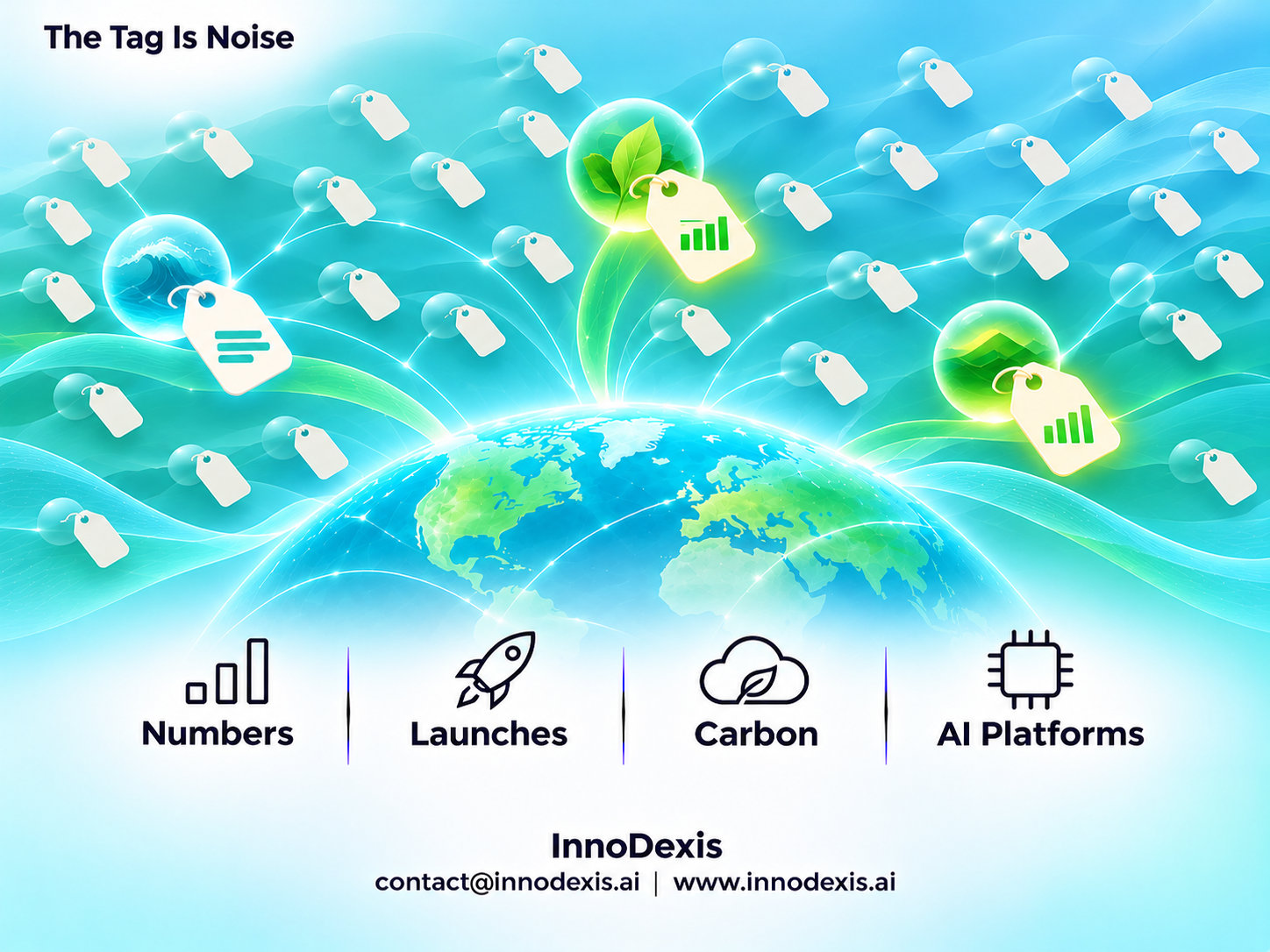
InnoDexis has published its latest Innovation Intelligence Report covering ESG origin-to-impact, analyzing 550 corporate ESG claims, 47 of them quantified, against 531 research environmental-impact records from 2,884 research and 2,280 corporate records during the complete 1–31 October 2026 window. The report reveals that ESG claims are tags, not evidence: tagged company records are High momentum in 14.5 percent of cases against 14.6 percent for the rest, while the 47 claims that carry a number reach 26 percent. Mean InnoDexis scores are 5.33 against 5.37.
Key Findings
The tag is noise. 550 company records, 24.1 percent, carry an ESG theme, and they are High momentum in 14.5 percent of cases against 14.6 percent for untagged records, and the tag is applied to launches such as an insulin approval, a television and an AI chip tape-out.
Numbers carry signal. Only 47 of 550 ESG records, 8.5 percent, state a quantified impact, 34 of them a carbon or greenhouse-gas figure, and quantified claims are High momentum 26 percent of the time against 14 percent, as with Topsoe's 98 percent CO2 capture of 1.1 million tonnes a year for HDF Energy and Sabey's 79–86 percent lower lifecycle emissions.
Claims and science sit in different technologies. Research states environmental impact in 531 records, led by biodiversity 95, crops 46, earth observation 45 and carbon capture 31, while corporate environmental claims concentrate in batteries 32, AI platforms 25, hydrogen 19 and grid 17, with only 9 in biodiversity.
Provenance is partial. Of corporate environmental claims, 66 percent sit in a technique with three or more validated research records stating environmental impact, only 74 ESG records, 13.5 percent, name an academic partner and are High momentum 4 percent of the time, and UN SDG mapping appears in 17 company records.
Research rarely quantifies either. Only 57 of 531 environmental-impact statements, 11 percent, contain a number, with the strongest exceptions Claros Technologies' 99.99 percent PFAS destruction at a Daikin site and Leipzig's green roofs cutting peak runoff by about 90 percent.
Strategic Insight and Trend Analysis
The defining structural finding is that credible ESG impact is the narrow set of claims that are quantified and sit in a technology where validated research also states environmental benefit. Everything else is a theme label, which is why an ESG screen built on tags rewards the label, misses the evidence and ranks a laptop launch beside a carbon-capture plant. ESG claims have migrated into product launches, 135 of the 550 records, many with a single sustainability sentence.
The claims that pass both tests concentrate in energy, including carbon capture with Topsoe for HDF Energy, thermal batteries with Rondo Energy and Rio Tinto, green ammonia with JERA and AM Green, and solar, while the exposed are AI and consumer-product claims with neither a figure nor research behind them. AI platforms carry 25 environmental claims against 10 validated research records. Environmental-impact research sits at TRL 5–6 in 147 records and TRL 7–9 in 52.
Nature-positive science lacks a market. Biodiversity and crops research states environmental impact in 95 and 46 records with few corporate counterparts, and Leibniz ZMT shows seabird-rich atolls produce 2.8 times more reef sediment. ESG themes are analyst-assigned in the same pass as momentum, provenance is inferred at technique level because partner references are empty, and quantified claims rest on 47 records.
Global and Industry Implications
For corporates and R&D teams, partner with research that quantifies impact and cite it, since claims with numbers stand out, and require a research basis for every environmental claim in disclosures. Named opportunities include water utilities with PFAS groups such as Claros, cities with green-roof data from Leipzig and heavy industry with LIKAT and INESC TEC.
For investors and capital allocators, screen on numbers and provenance rather than tags and back companies that commercialise quantified environmental research, including PFAS destruction with Claros, licensed carbon capture with Topsoe–HDF and ceramics decarbonisation with INESC TEC. Due diligence should ask for the figure, the method and the research behind it, and the 17 SDG-mapped records are not evidence.
For policymakers and national innovation bodies, disclosure rules can demand numbers and provenance, so requiring quantified, research-backed claims and funding measurement are the named priorities, and public registers such as Imperial College's London CO2 Register, which records 43.6 million tonnes stored in 2024, are the model. CSRD and ISSB guidance requiring numbers is the signal to watch.
InnoDexis Statement
"ESG claims are tags, not evidence — credible impact is the narrow set of claims that carry a number and sit in a technology where validated research also states environmental benefit," noted InnoDexis in its latest intelligence report.
Conclusion
Because ESG themes are analyst-assigned in the same pass as momentum, provenance is inferred at technique level and quantified claims rest on 47 records, the findings are cross-sectional. The signals to watch are whether a company's ESG claim cites a peer-reviewed study, whether a research group quantifies environmental benefit in a technology with many corporate claims, whether a regulator requires quantified impact in announcements, and whether biodiversity research names a corporate partner. The complete ESG Origin-to-Impact Report October 2026 is available to InnoDexis subscribers and enterprise clients.
About InnoDexis
InnoDexis is a real-time innovation intelligence platform connecting scientific discovery to commercial opportunity. Powered by InnoGraph, its proprietary innovation knowledge graph, the platform maps technologies across the entire lifecycle, from early-stage research (TRL 1) to market deployment (TRL 9), connecting researchers, institutions, startups, companies, products and emerging opportunities.
Covering 40+ specialised industry segments and 360 technology areas, InnoDexis delivers innovation tracking, research discovery, product and startup intelligence, investment insights, and AI-powered reports. Its mission is to bridge the gap between scientific discovery and real-world impact.
InnoDexis — From Lab to Market: Real-Time Innovation Intelligence.