Clinical Trial Finds Metformin Reduces Insulin Requirements in Adults With Type 1 Diabetes
A randomized trial shows Type 1 diabetes patients taking metformin required approximately 12% less daily insulin, suggesting a potential new mechanism beyond insulin resistance.
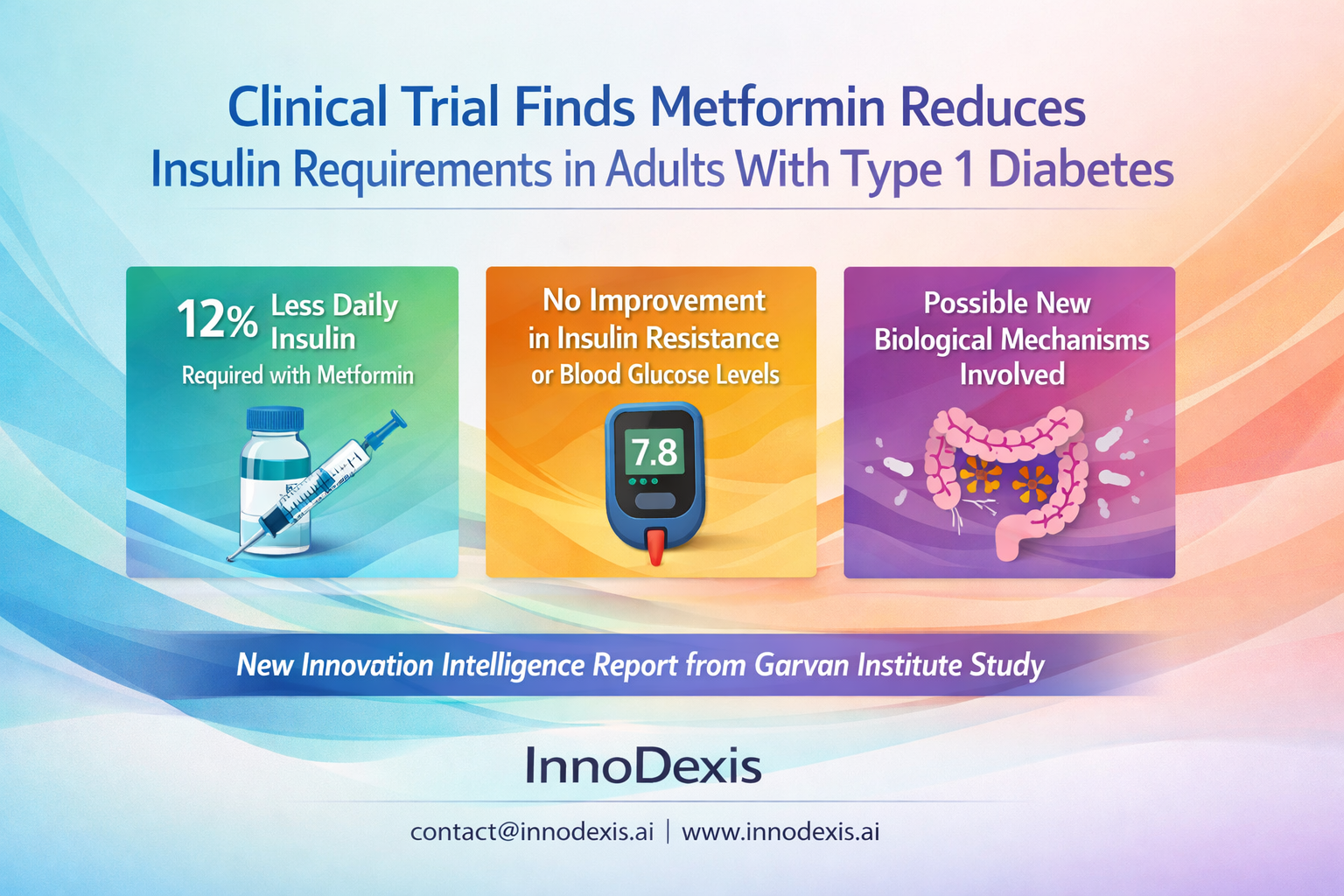
InnoDexis has published its latest Innovation Intelligence Report covering diabetes treatment research, analyzing a randomized clinical study conducted at the Garvan Institute of Medical Research in Australia. The report reveals that metformin, a drug widely used to treat Type 2 diabetes, reduced daily insulin requirements by approximately 12% in adults with Type 1 diabetes during a 26-week placebo-controlled trial. Despite the reduction in insulin use, the study did not observe improvements in insulin resistance or blood glucose levels, suggesting the drug may influence disease management through previously unrecognized biological mechanisms.
Key Findings
A randomized double-blind clinical trial known as the INTIMET study evaluated the effects of metformin in adults with Type 1 diabetes. Conducted over 26 weeks, the placebo-controlled trial involved 40 participants and assessed whether metformin could influence insulin requirements and metabolic outcomes in this patient population.
Participants receiving metformin required approximately 12% less daily insulin compared with those receiving placebo. The reduction indicates that metformin may alter insulin needs even in individuals who depend on externally administered insulin to manage blood glucose.
The trial found no measurable improvement in insulin resistance among participants taking metformin. This outcome challenges the long-standing assumption that the drug’s primary metabolic effect in diabetes management operates through improved insulin sensitivity.
Researchers also observed no significant improvement in blood glucose levels during the trial period. The absence of glycemic changes suggests that the mechanism underlying the reduced insulin requirement may operate through pathways not directly reflected in conventional glucose metrics.
Investigators proposed that the observed effect may be linked to changes in the gut microbiome rather than insulin resistance. While the mechanism remains under investigation, the hypothesis introduces a potential new direction for understanding how metformin interacts with metabolic processes in Type 1 diabetes.
The findings are relevant in the Australian context, where more than 130,000 individuals are living with Type 1 diabetes and approximately 13,000 are already using metformin off-label. The trial provides structured evidence that may inform future clinical guidance and treatment strategies.
Strategic Insight and Trend Analysis
The INTIMET trial highlights a broader shift occurring in diabetes research toward examining metabolic regulation beyond traditional insulin-centric pathways. While insulin therapy remains the core treatment for Type 1 diabetes, emerging research increasingly explores complementary mechanisms that may influence insulin requirements and metabolic stability.
Metformin’s established use in Type 2 diabetes has historically been associated with improved insulin sensitivity and reduced hepatic glucose production. The absence of improvements in insulin resistance within the INTIMET trial suggests that the drug may operate differently in Type 1 diabetes populations. This divergence underscores the importance of re-examining long-standing pharmacological assumptions when drugs are used in new clinical contexts.
The proposed connection to the gut microbiome reflects a growing area of biomedical investigation linking metabolic health to microbial composition and activity. Although the INTIMET trial did not directly confirm microbiome mechanisms, the hypothesis aligns with broader scientific interest in how microbiota influence immune function, metabolism, and chronic disease progression.
From an innovation perspective, the trial illustrates how incremental insights into existing therapies can generate new research pathways. Rather than introducing an entirely new pharmaceutical compound, the findings suggest that widely available medications may hold additional therapeutic roles when examined under different biological frameworks.
The study also demonstrates the value of controlled clinical trials in clarifying off-label drug use. With thousands of individuals already using metformin alongside insulin therapy, structured evidence can help determine whether such practices deliver measurable benefits and under what conditions.
Global and Industry Implications
For corporates and R&D teams in pharmaceutical and biotechnology sectors, the findings indicate that established metabolic drugs may warrant further investigation in Type 1 diabetes populations. Understanding alternative mechanisms, such as microbiome interactions, could open pathways for combination therapies or new metabolic targets.
For investors and capital allocators, the trial demonstrates how innovation in healthcare can emerge from re-examining existing treatments rather than developing entirely new molecules. Research programs exploring metabolic-microbiome interactions may attract increased attention as evidence linking these systems expands.
For policymakers and national health bodies, the results highlight the potential importance of clinical trials evaluating widely used medications in new therapeutic contexts. If future studies confirm the mechanism and long-term effects, treatment guidelines and prescribing practices may evolve accordingly.
InnoDexis Statement
“The INTIMET findings illustrate how controlled clinical evidence can reveal unexpected therapeutic pathways in established drugs, highlighting the importance of continued investigation into mechanisms that influence disease management beyond traditional metabolic models,” noted InnoDexis in its latest intelligence report.
Conclusion
The INTIMET trial adds new evidence to the evolving understanding of metabolic treatment strategies in Type 1 diabetes. A measurable reduction in insulin requirements, combined with the absence of changes in insulin resistance or blood glucose levels, suggests that further investigation into underlying biological mechanisms is warranted. As research into microbiome-related metabolic interactions expands, additional studies will likely determine whether the observed effect can be replicated and translated into broader clinical practice. The complete Metformin and Type 1 Diabetes Innovation Intelligence Report is available to InnoDexis subscribers and enterprise clients.
About InnoDexis
InnoDexis is a global Innovation Intelligence platform that tracks, analyzes, and interprets breakthrough innovations, prototypes, and emerging technologies across industries and countries. Its intelligence helps corporates, investors, and policymakers understand the true structure and direction of global innovation. Learn more at innodexis.ai.