Cannabis Research Expands Into Metabolic Medicine as Whole-Plant Extracts Show Distinct Therapeutic Effects
A preclinical study from University of California Riverside indicates that multi-compound cannabis formulations may influence metabolic dysfunction differently than isolated THC.
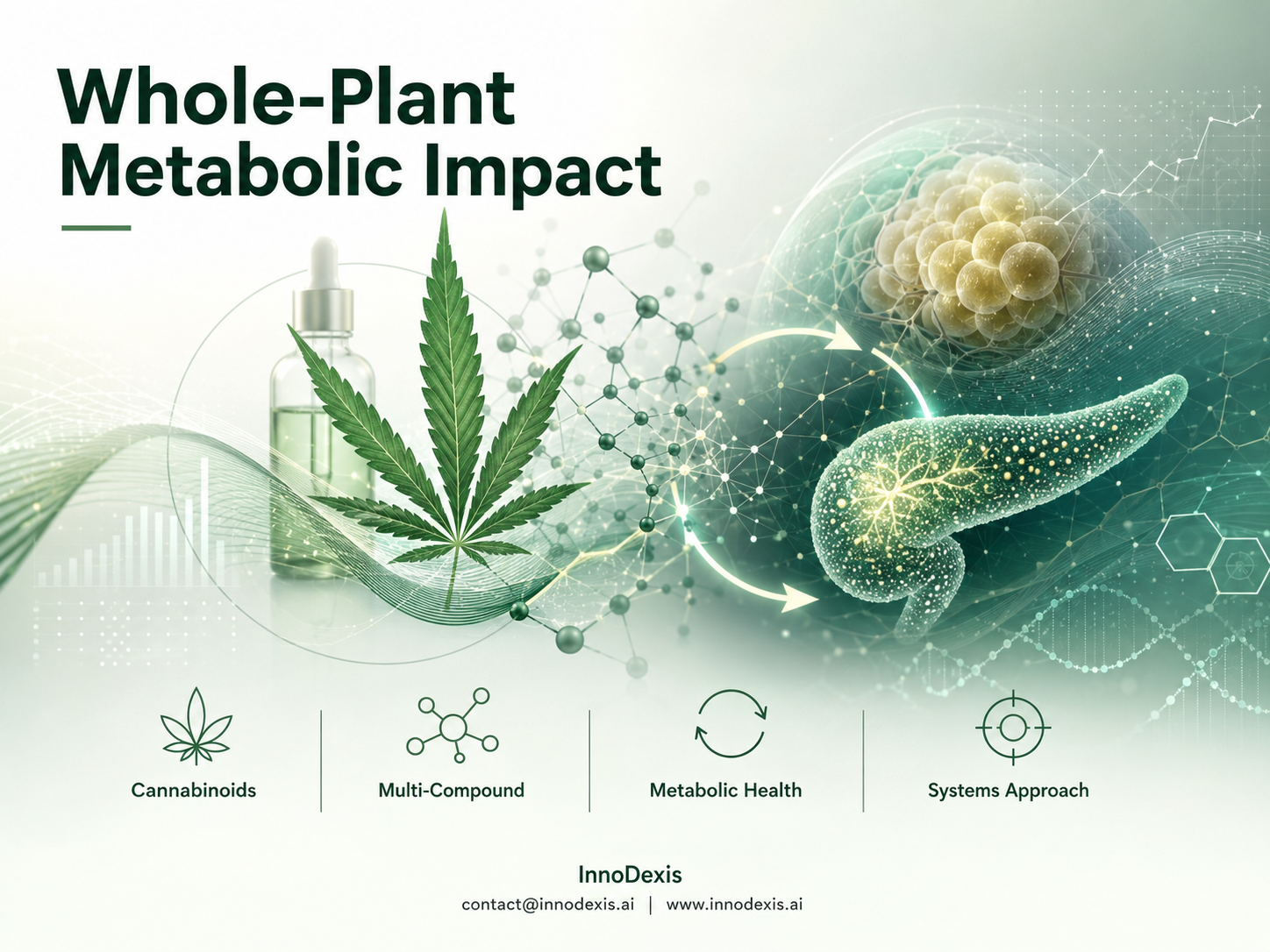
InnoDexis has published its latest Innovation Intelligence Report covering cannabis-derived therapeutics and metabolic health research, analyzing recent preclinical findings from University of California Riverside. The report reveals that whole-plant cannabis extracts improved metabolic dysfunction in obese mice, while isolated THC alone did not produce the same metabolic benefits. The findings suggest that therapeutic outcomes may depend less on individual cannabinoid compounds and more on the biological interactions between multiple molecules within cannabis formulations.
Key Findings
Researchers at University of California Riverside found that whole-plant cannabis extract triggered weight loss and improved glucose regulation in obese mice. The results indicate potential metabolic effects extending beyond previously emphasized neurological or pain-related applications of cannabinoids.
Pure THC alone also resulted in weight loss but failed to improve broader metabolic health indicators. This distinction suggests that isolated cannabinoid compounds may not replicate the full therapeutic profile observed in multi-compound formulations.
The study identified possible restoration of signaling pathways between adipose tissue and the pancreas. These findings indicate that cannabis-derived compounds may influence systemic metabolic communication mechanisms associated with obesity and glucose regulation.
Researchers also observed that non-psychoactive compounds may play a significant therapeutic role. The data suggests that cannabinoids or related molecules beyond THC could contribute substantially to metabolic outcomes within whole-plant formulations.
Collectively, the findings point toward a systems-level therapeutic model in cannabis research. Rather than focusing exclusively on single active compounds, the study emphasizes the importance of molecular interaction effects across complex cannabinoid mixtures.
Strategic Insight and Trend Analysis
The findings from University of California Riverside indicate a possible transition in cannabis research from THC-centered therapeutic models toward multi-compound biological formulations. This shift reflects broader changes occurring across pharmaceutical and biotechnology research, where increasing attention is being directed toward systems-level interactions rather than isolated molecular targets.
Historically, cannabis commercialization and medical research have largely concentrated on THC and its neurological effects. The current study suggests that metabolic outcomes may depend on the coordinated activity of multiple compounds working together within biological systems. This introduces a more complex therapeutic framework in which efficacy may arise from interaction patterns rather than single-agent activity.
The observed restoration of signaling between fat tissue and the pancreas further reinforces this systems-oriented perspective. Metabolic diseases such as obesity, metabolic syndrome, and Type 2 Diabetes involve interconnected regulatory pathways across organs and tissues. The findings suggest that multi-compound cannabinoid formulations may interact with these pathways in ways that isolated compounds cannot fully reproduce.
This trend aligns with growing interest in combination biologics, microbiome therapeutics, and multi-target drug platforms across life sciences. Within cannabis research specifically, the data may signal movement toward formulation-driven therapeutics designed around compound synergy, dosage balance, and pathway coordination.
The implications extend beyond cannabinoid science alone. If future validation confirms that therapeutic benefit is linked to molecular interaction networks, cannabis-derived medicines may increasingly be developed as adaptive biological systems rather than single-compound pharmaceutical products.
Global and Industry Implications
For corporates and R&D teams, the findings highlight opportunities to develop cannabis-derived therapeutics focused on metabolic disorders rather than exclusively neurological applications. Companies operating in biotechnology, pharmaceuticals, and cannabinoid science may increasingly prioritize formulation-based research strategies.
For investors and capital allocators, the study suggests potential expansion of the cannabis therapeutics market into metabolic medicine categories such as obesity and Type 2 Diabetes. Interest may shift toward companies developing multi-compound platforms with clinically validated biological interactions.
For policymakers and health regulators, the findings underscore the importance of evaluating cannabis therapeutics beyond THC concentration alone. Regulatory frameworks may increasingly need to address complex formulations involving non-psychoactive compounds and systems-level therapeutic effects.
InnoDexis Statement
“The emerging evidence suggests that future cannabinoid therapeutics may be defined less by isolated compounds and more by how multiple biological molecules interact within coordinated metabolic systems,” noted InnoDexis in its latest intelligence report.
Conclusion
The preclinical findings from University of California Riverside indicate that cannabis-derived therapeutics may be entering a broader phase of metabolic and systems-level research. As evidence accumulates around compound interactions, signaling pathways, and formulation-based effects, cannabinoid science may increasingly intersect with obesity and metabolic disease innovation. Monitoring how these findings progress through validation and clinical translation will be critical in understanding the future role of cannabis-derived therapies in metabolic medicine. The complete Cannabis and Metabolic Health Innovation Intelligence Report is available to InnoDexis subscribers and enterprise clients.
About InnoDexis
InnoDexis is a global Innovation Intelligence platform that tracks, analyzes, and interprets breakthrough innovations, prototypes, and emerging technologies across industries and countries. Its intelligence helps corporates, investors, and policymakers understand the true structure and direction of global innovation. Learn more at innodexis.ai.