AI-Powered Nanophotonic Biochip Enables 20-Minute Molecular Disease Detection with Over 99% Accuracy
A new diagnostic platform integrates nanophotonics and AI to deliver rapid, high-sensitivity detection of genetic disease markers from minimal biological samples.
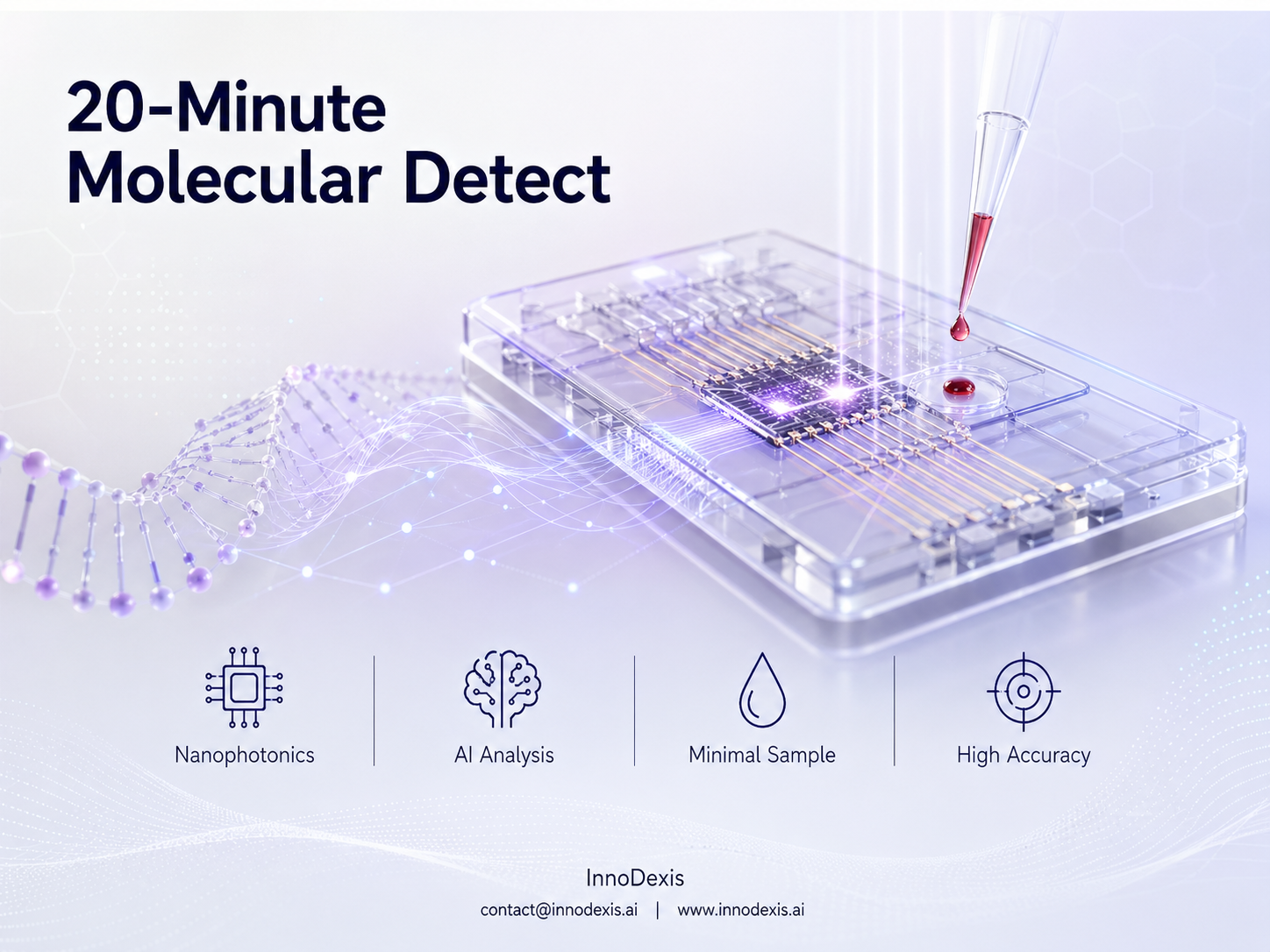
InnoDexis has published its latest Innovation Intelligence Report covering AI-driven medical diagnostics, analyzing a nanophotonic biochip developed at Nanyang Technological University. The report reveals that the platform enables molecular-level disease detection within 20 minutes with over 99% accuracy. By combining nanophotonic signal amplification with AI-based image analysis, the system eliminates the need for complex PCR workflows, signaling a transition toward faster, more accessible, and scalable diagnostic models.
Key Findings
The nanophotonic biochip achieves molecular disease detection in approximately 20 minutes, significantly reducing the time required for diagnostic analysis compared to traditional laboratory workflows. This reduction in turnaround time has direct implications for clinical decision-making and early intervention.
The system demonstrates over 99% accuracy in identifying genetic disease markers, indicating a high level of reliability in detecting clinically relevant signals. This level of precision supports its potential application in both clinical and screening environments.
The platform detects microRNA biomarkers from a single drop of blood, highlighting its minimally invasive design and suitability for broader patient populations. The ability to work with small sample volumes expands its usability beyond specialized laboratory settings.
Nanophotonic signal amplification is combined with AI-based image analysis to achieve single-molecule sensitivity. This integration allows the system to identify extremely low concentrations of biomarkers, which is critical for early-stage disease detection.
The biochip removes the need for polymerase chain reaction (PCR) amplification steps, simplifying the diagnostic workflow. By eliminating complex preprocessing requirements, the system reduces dependency on laboratory infrastructure and technical expertise.
Strategic Insight and Trend Analysis
The development at Nanyang Technological University reflects a broader transition in diagnostics from lab-intensive, time-consuming processes toward real-time, AI-enabled molecular analysis. The combination of nanophotonics and artificial intelligence represents a convergence of sensing and computational capabilities that enables faster and more precise detection mechanisms.
The shift away from PCR-based workflows is particularly significant. Traditional diagnostic models rely on amplification techniques that require controlled environments, specialized equipment, and extended processing times. By removing this dependency, the biochip introduces a more streamlined and potentially decentralized diagnostic approach.
The ability to detect biomarkers at single-molecule sensitivity using minimal sample input indicates a move toward continuous and scalable diagnostics. Rather than episodic testing triggered by symptoms, such systems enable more frequent monitoring and earlier identification of disease signals.
This transition also suggests a redefinition of diagnostic infrastructure. As detection becomes faster and less dependent on centralized laboratories, diagnostic capabilities may increasingly be distributed across clinical settings, outpatient environments, and potentially non-clinical contexts. The integration of AI further supports automated interpretation, reducing reliance on manual analysis.
Global and Industry Implications
For corporates and R&D teams, the findings indicate a shift toward integrating sensing technologies with AI-driven analytics in diagnostic product development. Organizations may need to align expertise across nanotechnology, data science, and biomedical engineering to develop competitive solutions.
For investors and capital allocators, the emergence of rapid, high-accuracy diagnostic platforms suggests opportunities in technologies that enable scalable and decentralized healthcare delivery. Platforms that reduce infrastructure requirements while maintaining precision may attract increased attention.
For policymakers and national innovation bodies, the transition toward faster and more accessible diagnostics highlights the need for regulatory frameworks that can evaluate AI-integrated medical devices. Supporting validation and deployment pathways for such technologies may be critical for broader healthcare adoption.
InnoDexis Statement
The integration of nanophotonics and AI in molecular diagnostics indicates a structural shift toward rapid, high-sensitivity detection systems that reduce reliance on traditional laboratory workflows,” noted InnoDexis in its latest intelligence report.
Conclusion
The nanophotonic biochip developed at Nanyang Technological University demonstrates how diagnostic systems are evolving toward faster, more precise, and less resource-intensive models. As the ability to detect disease at the molecular level becomes increasingly rapid and scalable, healthcare systems may need to adapt to more frequent and earlier diagnosis patterns. Monitoring how such platforms are validated, deployed, and integrated into clinical practice will be critical in shaping the future of diagnostics. The complete AI-Driven Diagnostics Innovation Intelligence Report is available to InnoDexis subscribers and enterprise clients.
About InnoDexis
InnoDexis is a global Innovation Intelligence platform that tracks, analyzes, and interprets breakthrough innovations, prototypes, and emerging technologies across industries and countries. Its intelligence helps corporates, investors, and policymakers understand the true structure and direction of global innovation. Learn more at innodexis.ai.